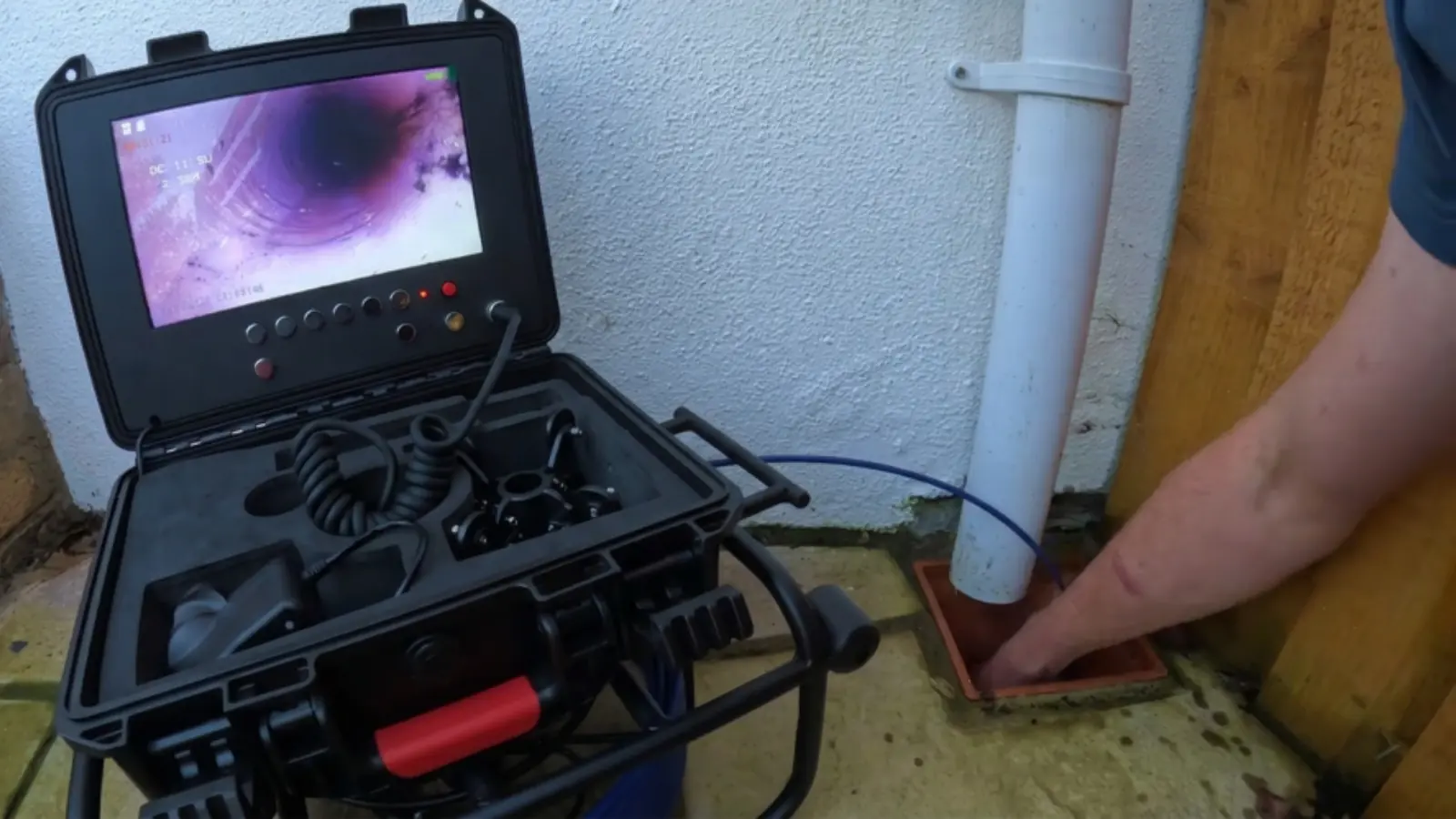
Wastewater coming up through a floor drain or a tub is miserable and urgent, and we pick up 24/7 for exactly this. Stop using water everywhere in the house, keep people and pets out of affected areas, and call (855) 575-2890 so we can plan the right equipment before we head over.
Sewage backing up into your home
Steps to take before we arrive
The main sewer line carries every drain in the house out to the street. When it blocks, wastewater looks for the lowest opening, usually a basement drain.
- Stop all water use, including toilets, showers, laundry and the dishwasher.
- Keep children, pets and bare feet out of any standing wastewater.
- Turn off power to a flooded basement area only if you can reach the panel without stepping in water.
- Open windows for ventilation if the smell is strong.
- Take photos of the damage for your records and call us.
Signs the main line is blocked
Several fixtures at once
A toilet, a tub and a sink all slow or back up on the same day. One clogged fixture does not do that.
Floor drain bubbling
Water or sewage rising in the lowest drain of the house is a classic main line sign.
Gurgling sounds
Air pushed back through the traps when water flows in another room, often heard as burbling in a toilet.
Foul sewer smell
A smell near drains or in the yard near the lateral can mean the line is backed up or broken.
Wet yard patch
Soggy, sunken or unusually green ground along the sewer path may point to a damaged line.
Finding the cleanout
A cleanout is a capped pipe that gives direct access to the main line. In many homes it sits in the basement near the foundation wall or floor, in a crawl space or outside near the house. It usually has a round or square cap and sometimes stands a few inches above the floor.
If you can find it, do not open it yourself while the line is full. Pressure behind the cap can release wastewater all at once. Tell us where it is, and if you cannot find it, say so, because we can often locate it. A missing cleanout can also be added during a repair, and the Village of Park Forest includes cleanout installation under its sewer repair permits.
How we clean the main line
Confirm the main is the problem
We check the fixtures and the cleanout to see where water stops and where it moves freely.
Open the cleanout and cable
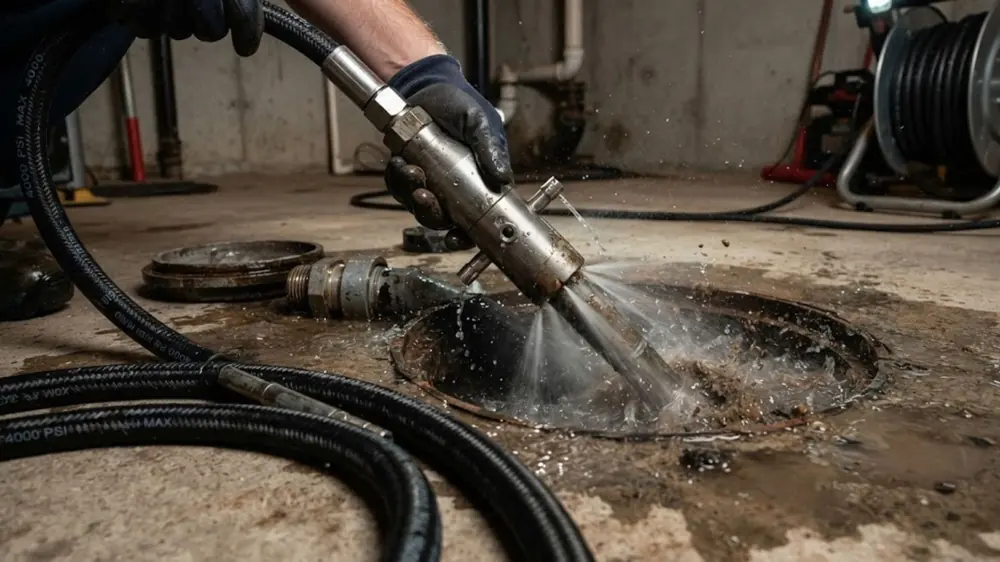
A larger cable machine with a cutting head goes through the cleanout toward the street, breaking through the blockage.
Retrieve what is causing it
We look at what comes back, whether roots, paper, grease or foreign objects, and note how far from the house it was.
Flush and verify
We run water through the line to confirm it flows freely, and we tell you if it needs jetting or a camera.
Why main lines clog
Most main line blockages come from four things. Tree roots find the tiny gaps at joints. Grease coats the pipe over years. Wipes and paper towels, even those marked flushable, do not break down the way toilet paper does. And low spots called bellies, where the pipe has settled, hold water and catch debris.
The Village of Park Forest repeats Metropolitan Water Reclamation District guidance that fats, oils, wipes and paper towels should stay out of drains and toilets, and it states that urban flooding can cause sewage backups in basements. Keeping those items out helps your own line and lets the public sewers do their job.
Cleaning or repair
| What we find | What it suggests | Likely next step |
|---|---|---|
| Paper, grease or a one-time object | A clog, with a healthy pipe | Clear it and talk about habits |
| Roots at a joint | The pipe is open or leaking there | Clear it, then a camera inspection |
| Repeated grease buildup | Coating on the wall | Consider hydro jetting |
| Cable stops at the same point each time | Possible break, offset or belly | Camera first, then sewer line repair |
| Backup only during heavy rain | Capacity issue or a damaged lateral | Inspect, ask the Village about the street line |
Park Forest homes and heavy rain
Park Forest's park system was designed as reservoirs for stormwater, and the Village has restored Central Park as a wetland. Yet when rain falls faster than sewers can carry it, basement backups can still happen. The Village offers a Flood Factor map so you can check an address, and it is a modeled estimate rather than a Village measurement.
If your line backs up only during storms, tell us. That pattern points to a street-level capacity problem or a cracked lateral taking in groundwater, and the two need different responses. A clean, intact lateral is your best protection.
Same-day and after-hours service
A main line backup does not wait for Monday. We take these calls at night and on weekends, and we offer same-day visits when our schedule allows. We cannot promise a specific arrival time, but we will walk you through the next steps and send a crew prepared to cable the line.
What affects the cost of sewer line cleaning
Cleanout access
A reachable cleanout speeds the job. Without one, we may need to pull a toilet or work through a vent, which takes longer.
Length and depth of the run
Longer laterals and deeper lines need more cable and time.
What is blocking the line
Paper is simple. Roots, hardened grease or a foreign object may take extra passes or a different tool.
Time of day
Nights, weekends and holidays pull the crew out of the normal schedule.
Follow-up work
A camera look, jetting or a repair is a separate task if the cleaning shows a bigger problem.
Cleaning rarely needs a permit, but installing a cleanout or repairing the line does in Park Forest. Homeowner policies may cover sudden backup damage if you have that endorsement, though cleaning costs themselves often are not covered, so ask your insurer. Call (855) 575-2890 and tell us what you see, and we will give you a real number instead of a guess.
Get Your Real NumberQuestions we hear
Yes. Our 24/7 line is answered, including nights and weekends. We book same-day appointments when our crew has room. We do not promise a specific arrival time, but we will tell you what to do while you wait.
If one sink is slow, the problem is local. If a toilet, a tub and a floor drain all misbehave together, or the basement drain bubbles, the main line is likely blocked. Tell us the pattern when you call.
Stop using water, keep people away from standing sewage, ventilate the area and avoid stepping in water near outlets. Do not open the cleanout cap on a full line. Photos of the damage help if you file an insurance claim.
Yes. They hold together far longer than toilet paper and tangle with grease and roots. The Village of Park Forest repeats Metropolitan Water Reclamation District guidance that wipes and paper towels belong in the trash, not the toilet.
Sometimes, if the cause was a one-time object. If roots, grease or a damaged pipe caused the blockage, it will likely come back. We tell you what we found and whether a camera inspection or repair makes sense.
Look near the foundation wall in the basement, in a crawl space or outside near the house. It is a capped pipe, often round or square. If you cannot find it, tell us and we will help you find it.
The line from your house to the connection with the public sewer is typically the homeowner's. If the clog sits in the street main, the Village is responsible. A cleaning and camera look can show where the blockage sits. Village Hall is at 708-748-1112 for questions.
Standards and sources
Written by the Park Forest Express Plumbing team. Plumbing work in Illinois follows the Illinois Plumbing Code, 77 Ill. Adm. Code 890, which the Village of Park Forest adopts. The Village Building Department states that contractors must be Park Forest licensed and that a permit is required. You can confirm any plumber's license on the Illinois Department of Public Health license verification tool.