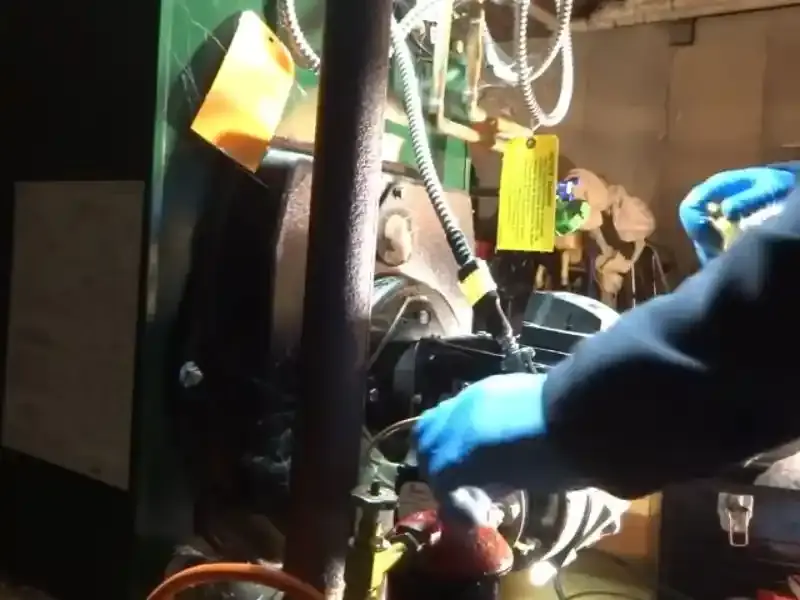
A boiler heats water, or makes steam, and sends it through pipes to radiators, baseboards or in-floor loops. Repair is the better choice when one part has failed, such as a circulator pump, a thermostat, a zone valve or an igniter. Replacement is the better choice when the heat exchanger or the vessel itself leaks, since that failure cannot be patched in a lasting way.
Most decisions sit between those two ends. The table below sorts the common situations, and the sections after it explain what a new installation involves so you know what to ask.
A quick way to sort the decision
| Situation | Leans toward | Reason |
|---|---|---|
| Pump will not run, or a zone stays cold | Repair | Circulators and zone valves are replaceable parts |
| Igniter, sensor or control board fault | Repair | A single part, usually with a clear diagnosis |
| Water dripping from the boiler body or heat exchanger | Replace | A leaking vessel or exchanger is not reliably fixable |
| Heavy rust, scale or sludge inside | Replace, or flush first | Corrosion inside tells you the system has aged |
| Several repairs in a short time | Replace | Repeat failures usually point to a worn system |
| Parts no longer made | Replace | Repairs become hard to source |
| Boiler far too large or small for the house | Replace | Sizing problems cannot be repaired |
Age matters, but it is not a verdict. Many cast iron boilers run for decades when maintained, while some lighter units wear out sooner. A well-kept older boiler with a simple fault can be worth repairing, and a young unit that leaks may not be.
Signs a boiler needs attention now
No heat or uneven heat
One room stays cold or the radiators are warm at the bottom and cool at the top. Air in the loop or a failed zone valve are common causes.
Banging or kettle-like noises
Mineral scale or low water can cause rumbling, and trapped air causes knocking. Ignoring it can damage the heat exchanger.
Pressure that swings
Pressure that climbs fast or drops often can mean a failed expansion tank or a slow leak in the loop.
Water around the base
Dripping from a fitting may be a simple repair. Water from the vessel itself generally means the boiler is finished.
Safety first
Boilers burn fuel and can produce carbon monoxide if venting fails. Keep working CO alarms near sleeping areas. If you smell gas, leave the house and call the gas utility or 911 before anything else, and do not relight a pilot yourself.
For a failed part, our boiler repair page describes how a service visit works, including diagnosis before parts are replaced. A quick fix is not always the right one. A leak from the vessel itself generally means a repair will not last.
Rather have a plumber look at it?
Describe the problem on the phone and ask for a same-day appointment when one is available.
What a proper installation includes
A good installation starts with sizing. The installer estimates the home's heat loss from its size, insulation and windows, then picks a boiler to match. Going by the old boiler's size alone is a common mistake, because houses change after weatherstripping, window replacements and added insulation.
Measure the heat load
A room-by-room heat loss estimate shows how much output the house needs on a cold design day. An oversized boiler short-cycles and wears faster.
Check radiation and piping
The radiators, baseboards and pipe sizes must be able to deliver the heat. Old piping may need repair, balancing or air removal.
Plan the venting
High-efficiency condensing boilers vent in plastic pipe and need a condensate drain. Older atmospheric units use a chimney, and a liner may be needed so exhaust does not condense in the flue.
Install controls and safeties
This includes the expansion tank, a pressure relief valve, a low water cutoff where required, air separation and the zone controls.
Fill, purge and test
The loop is filled, air is purged, and the system is tested for leaks and combustion. The installer then walks through the controls and the final inspection.
The expansion tank deserves a note. Heated water expands, and a closed loop needs somewhere for that volume to go. A waterlogged tank is a common cause of pressure swings and relief valve drips.
Zones, controls and the rest of the plumbing
Zoning splits the house into areas with their own thermostats, using zone valves or separate circulators. It lets you heat a bedroom wing less than the living area, and it can reduce wasted heat. A new installation is the right time to fix a layout that never worked well.
Boiler work also touches plumbing, including makeup water lines, backflow preventers, drains and gas piping. Our plumbing installation page explains the wider scope, and it is wise to ask who handles each part when you compare proposals.
Questions to ask before you approve a proposal
- How was the boiler size chosen, and was a heat loss estimate done?
- What will the venting look like, and where will condensate drain?
- Is the expansion tank new, and is a low water cutoff included?
- Who pulls the permit and arranges the inspection?
- What happens to the old boiler, and is there any asbestos on old pipe wrap that must be handled by a specialist?
The asbestos question matters on very old systems, where insulation on pipes or the boiler can contain it. A technician should flag suspect material and not disturb it. Call (855) 575-2890 if you want a tech to look at your system before deciding.
Park Forest note: permits and licensing
The Village of Park Forest Building Department, at 350 Victory Drive, requires that all contractors doing work in the village be Park Forest licensed. A permit is needed if you do the work yourself or hire a contractor, and a homeowner doing their own work submits a waiver form. If a contractor pulls the permit, you sign the proposal or application. Permits are dropped off or mailed, not taken by email or online, and the Village adopts the Illinois State Plumbing Code.
State rules matter too. The Illinois Department of Public Health requires that people who install, alter and repair plumbing be licensed, and you can check a plumber's license in the IDPH verification tool before you sign. In nearby Chicago Heights, housing age varies and the sources do not state it, so check your own home's build year to judge your system, and in Matteson ask the Village what its own permit steps are, since they may differ.
Questions we hear
Look for water that appears under or at the base of the boiler body, with rust streaks or staining around seams. A dripping pipe fitting or relief valve is a different, more fixable problem. A technician can tell which one you have.
Often the venting changes. Condensing units vent in plastic pipe through a wall and need a condensate drain. A boiler staying on a chimney may need a liner. The installer should check this on site.
Common causes are a waterlogged or failed expansion tank, a slow leak, or an auto-fill valve that is not seating. Pressure that changes by a lot is worth having checked before it opens the relief valve.
A homeowner can submit a waiver form for their own work in Park Forest, but combustion, venting and gas piping carry real safety risk. Most owners hire a licensed plumber to handle it, and the permit still applies to the job.
The Village requires every contractor working in Park Forest to be Park Forest licensed, and Illinois requires plumbing work to be done by state-licensed plumbers. A permit is required either way. You can verify a plumber's state license through the IDPH license verification tool.
The Village requires every contractor working in Park Forest to be Park Forest licensed, and Illinois requires plumbing work to be done by state-licensed plumbers. A permit is required either way. You can verify a plumber's state license through the IDPH license verification tool.
Standards and sources
Written by the Park Forest Express Plumbing team. Plumbing work in Illinois follows the Illinois Plumbing Code, 77 Ill. Adm. Code 890, which the Village of Park Forest adopts. Local statements on this page come from Village of Park Forest pages, and the Building Department states that a permit is required whether you or a contractor does the work. Before you hire anyone, check the license on the Illinois Department of Public Health license verification tool.