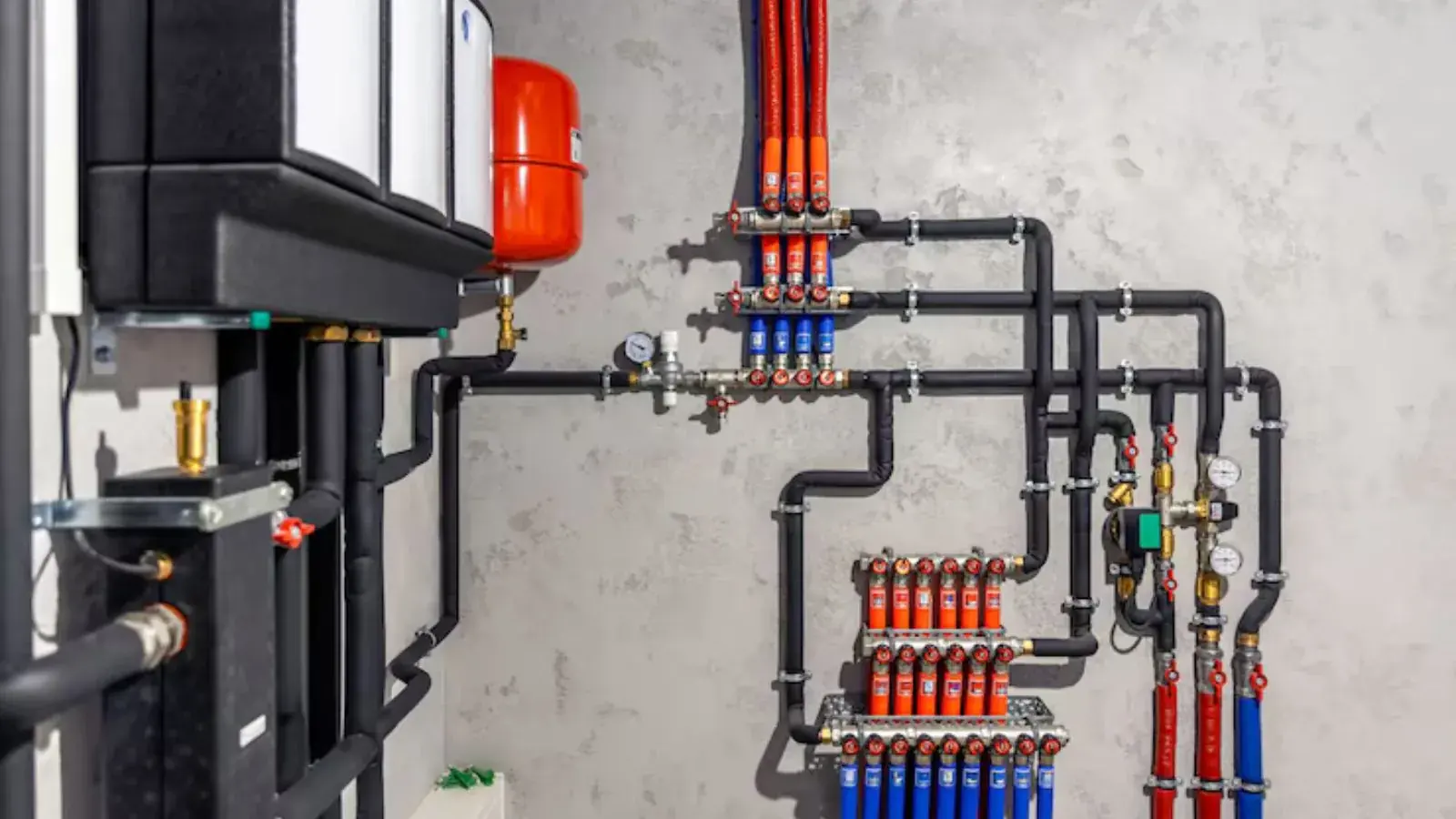
Older homes in cold-climate Illinois are often heated by hot-water or steam boilers, and they tend to quit when demand is highest. Cold-weather no-heat calls are handled by calling our 24/7 line at (855) 575-2890. We also work on boilers by appointment for noises, pressure drops and annual tune-ups.
Boiler quit on a cold night
Start with the simple checks. Make sure the thermostat is calling for heat, the switch at the boiler is on, and the gas valve is open. Look at the pressure gauge and the display for a code.
If you smell gas, leave the house and call the gas utility or 911 from outside. If a pipe has frozen or a radiator valve is leaking, shut the water feed and call us. We cannot see inside a wall without opening it, so we start with what we can measure.
Hot-water and steam boilers are not the same animal
| Point | Hot-water boiler | Steam boiler |
|---|---|---|
| What moves heat | Heated water pumped through pipes to radiators or baseboard | Steam rises to radiators and condenses back to water |
| Working pressure | Low pressure with an expansion tank | Very low pressure, with a sight glass showing the water level |
| Common problems | Air in the system, failed circulator, low pressure, bad expansion tank | Low water cutoff, stuck air vents, banging pipes, dirty water |
| Routine care | Bleeding radiators, checking pressure | Draining sediment, checking water level |
Know which one you have before you call. A sight glass with a water line suggests steam, and a round pressure gauge with a circulator pump suggests hot water. If you are unsure, just tell us what you see.
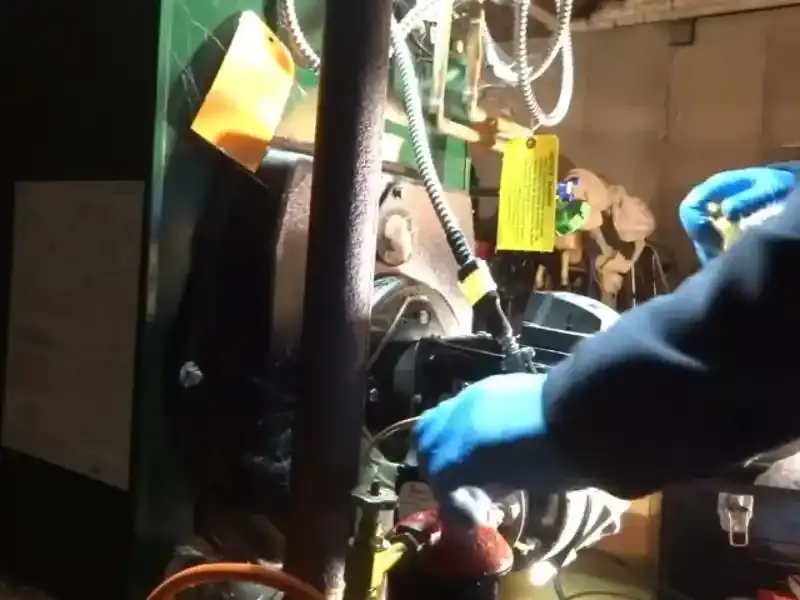
Symptoms and what they usually point to
No heat at all
Check power, thermostat and fuel first. Then look at a tripped limit, a failed igniter, a dead circulator or a low water cutoff.
Banging or kettling
Banging in steam can be water trapped in a pipe that does not pitch correctly. Kettling in a hot-water boiler is often scale or sludge on the heat exchanger.
Low pressure
A hot-water boiler that keeps losing pressure has a leak somewhere or a failed expansion tank.
Relief valve dripping
Over-pressure from a bad expansion tank, an overfilled system or a worn valve. Do not cap it.
Cold radiators upstairs
Air trapped in the system or an unbalanced loop.
Expansion tank, pressure and relief valve
A hot-water boiler is a closed loop, and heated water expands. The expansion tank holds a cushion of air that absorbs that growth. When the diaphragm fails, pressure spikes every cycle and the relief valve starts to drip.
We check the cold fill pressure, the operating pressure and the tank's air charge. Replacing a relief valve alone without checking the expansion tank is a fix that often does not last. We also look at the fill valve for a slow leak.
Bleeding radiators and clearing air
Turn the system off
Let the circulator stop and the radiators cool.
Find the bleed valve
It is usually at the top corner of the radiator, with a small square or slotted stem.
Open slowly
Hold a rag below the valve and open it until you hear air hiss, then close it when water appears.
Check the pressure
Add water at the feed if the gauge dropped, then restart and confirm every radiator warms.
If the same radiator keeps filling with air, there is a leak or a bad air vent somewhere. We trace it rather than keep bleeding. A hidden leak can also be a job for leak detection.
Annual service pays for itself
A yearly visit before the heating season catches worn parts early. We clean the burner, test the safeties, check the vent and flue, look at the pressure and expansion tank, and test the circulator. For steam, we test the low water cutoff and drain sediment.
Boilers that burn gas or oil should also have a working carbon monoxide alarm nearby. A boiler that soots up, smells or backdrafts needs attention right away.
When to repair and when to replace
| Situation | Lean toward |
|---|---|
| Failed igniter, circulator or thermostat | Repair |
| Leaking heat exchanger or cracked section | Replace |
| Frequent repairs on an old boiler | Replace |
| Inefficient and rising fuel use | Consider replacing |
| Dripping relief valve, bad expansion tank | Repair |
Some boilers also feed the domestic hot water, so a failing boiler can show up as a failing water heater. If you want a separate on-demand source, see our tankless water heater page.
What affects the cost of boiler repair
Type and age
Steam, hot water, gas and oil systems each have different parts.
The failed part
A thermostat or air vent is a different job from a circulator, control board or heat exchanger.
Access
Basement layout and pipe condition change the time.
Parts availability
Older boilers may need parts that take longer to source.
After-hours calls
Cold-weather no-heat visits at night are a different scheduling situation from a daytime appointment.
Homeowners insurance typically does not cover wear on a boiler but may respond to sudden damage from a burst pipe. Replacing a boiler can be a permit item with the Village, and we will confirm what applies. Call us and we will give you a real number once we have seen the system.
Get Your Real NumberQuestions we hear
We work on both. They behave differently, so we first identify which one you have by looking at the gauges, sight glass and piping. Tell us what you see when you call and we will plan the visit around it.
Yes, cold-weather no-heat calls are handled through our 24/7 line. We do not promise arrival times, but we offer same-day appointments when available and tell you what to check while you wait.
A hot-water system loses pressure from a leak, a failed expansion tank, a dripping relief valve or air coming out of the water. Adding water only masks it. We look for the leak or the tank fault.
In steam, it is usually water pooled in a sagging pipe or a stuck vent. In hot water, kettling points to scale or sludge on the heat exchanger. Both get worse over time.
Turn the system off, open the bleed valve slowly with a rag below it, close it when water appears, then check the boiler pressure. If the radiator keeps filling with air, call us because something is wrong.
Once a year before the heating season is standard advice. The visit covers the burner, safeties, vent, pressure and circulator. Skipping it often means a breakdown on the coldest day.
Standards and sources
Written by the Park Forest Express Plumbing team. Plumbing work in Illinois follows the Illinois Plumbing Code, 77 Ill. Adm. Code 890, which the Village of Park Forest adopts. The Village Building Department states that contractors must be Park Forest licensed and that a permit is required. You can confirm any plumber's license on the Illinois Department of Public Health license verification tool.