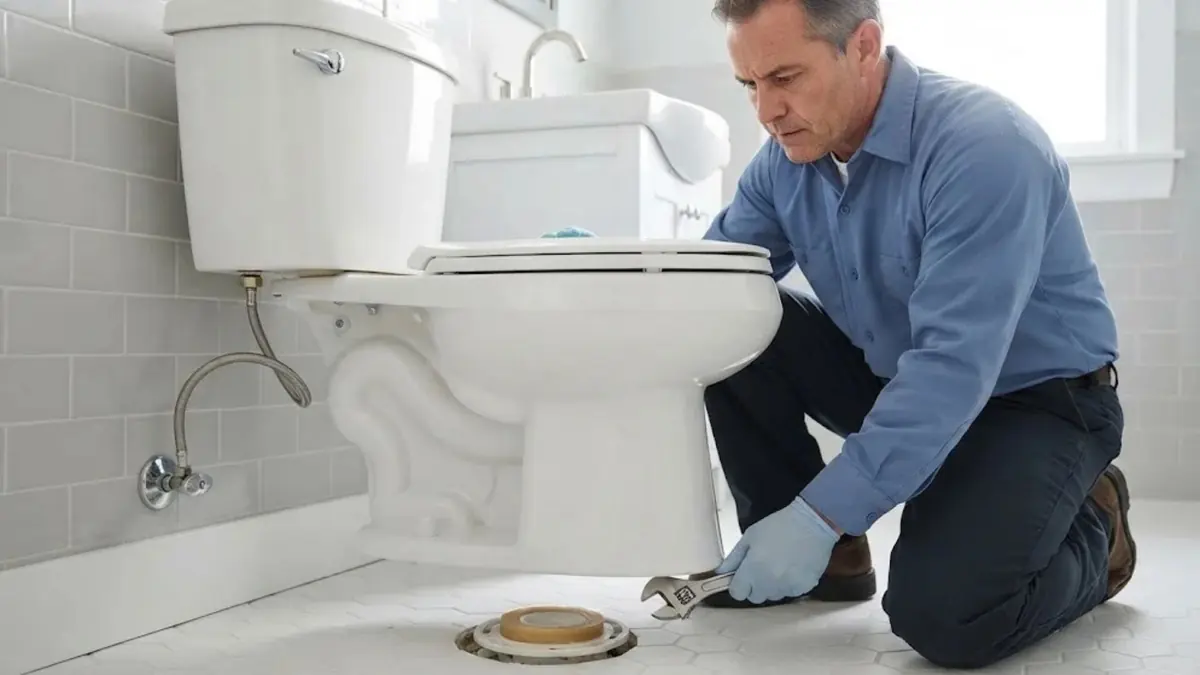
Before you buy, measure the rough-in
Swapping a toilet is a reasonable weekend job when the flange is sound and the floor is solid. The first thing to check is the rough-in, the distance from the finished wall behind the toilet to the center of the drain. Twelve inches is the most common size, though 10 and 14 inch layouts exist, and a toilet built for the wrong one will not sit right.
Measure to the center of the closet bolts, not to the edge of the bowl. If you have a baseboard, measure from the wall itself. Write the number down and bring it to the store.
| Measurement | What to check | What happens if it is wrong |
|---|---|---|
| Rough-in distance | Wall to center of the closet bolts, usually 12 inches | The tank hits the wall or the bowl sits too far out |
| Bowl shape | Round or elongated | Elongated bowls need more room in front |
| Flange height | Top of the flange level with the finished floor | A low flange needs a spacer ring and a thicker wax ring |
| Drain size | 3 or 4 inch drain, with a matching flange | The seal fails and sewer gas escapes |
| Water supply | Valve location and tank inlet position | The supply line kinks or will not reach |
Tools and parts that make the job easier
Plan the day around the old toilet's weight. A full-size china toilet runs well over 60 pounds, and the tank alone is heavy and awkward. Lift with your legs, carry the bowl to a tarp or a bathtub lined with a towel, and ask for help instead of risking your back or the tile.
Wax ring or wax-free seal
A new ring every time you lift a toilet. A reused ring does not compress back into a seal, and the leak you get later runs under the floor.
Closet bolts
Two brass bolts that hold the toilet to the flange. Buy a new pair, because rusted ones snap while you tighten.
Braided supply line
A flexible stainless line from the shutoff valve to the tank. Pick one long enough that it does not stretch tight.
Shims, level and putty knife
Plastic shims fix a floor that slopes, and a short level tells you when the bowl is truly flat before you tighten.
Rather have a plumber look at it?
Describe the problem on the phone and ask for a same-day appointment when one is available.
The installation, step by step
Shut off and empty the old toilet
Close the shutoff valve, flush, and sponge out the tank and the bowl. Disconnect the supply line and keep a towel under it, since a little water always comes out.
Lift the old toilet and clean the flange
Remove the nuts on the closet bolts and rock the toilet loose. Stuff a rag in the drain to block sewer gas and scrape off the old wax with a putty knife. Check the flange for cracks, rust or a loose fit.
Set the new bolts and wax ring
Slide new closet bolts into the flange slots and set the wax ring on the flange or on the horn of the bowl, whichever the maker recommends. Keep the ring clean and centered.
Lower the toilet straight down
Line the bowl holes up with the bolts and press down evenly. Do not twist or rock it side to side, because that smears the wax and opens a path for leaks. Set the washers and nuts and tighten a little at a time, alternating sides.
Connect, test and caulk
Mount the tank if it is separate, reconnect the supply line and open the valve. Flush several times and look for drips at the base and the supply line. Once the bowl is level and dry, trim the bolt caps and add a thin line of caulk along the front and sides.
Practical tip
Tighten the nuts only until the toilet stops rocking, then add a quarter turn. Porcelain cracks under force, and a toilet that cracks at the base cannot be repaired. If the bowl still rocks after shimming, the floor or the flange needs attention instead of more torque.
When to stop and call a plumber
Stop if the flange is broken or sits below the floor, if the subfloor feels soft, or if you smell sewer gas after the new ring is in place. Those are repair jobs, and a new toilet on a damaged flange will leak again. Damaged flanges and rotted floor boards are common under older toilets that have been rocking for years.
Keep the old toilet's tank bolts, gaskets and supply line out of the new box mix, and read the manufacturer's sheet. Some tanks need a rubber cushion between tank and bowl, and some need the bolts snugged evenly in turn so the china does not crack under uneven pressure. Skipping the sheet is how a tank ends up leaking at the bolts on day two.
Our toilet repair and installation service handles flange repair along with swaps. When the work also involves moving the drain or adding a bathroom, plumbing installation covers the piping and the code side. We cannot tell the condition of a floor until the old toilet is up.
Park Forest note: permits, code and licensing
The Village of Park Forest Building Department says a permit is required when you do plumbing work yourself and when you hire a contractor. A homeowner doing the work submits a waiver form. If a contractor pulls the permit, the homeowner signs the proposal or application. Permits are not taken by email or online, so plan a drop-off or a mailed copy at 350 Victory Drive, and call 708-748-1112 to ask whether a like-for-like toilet swap needs one.
The Village adopts the Illinois State Plumbing Code, which sets the rules for flanges, venting and fixture connections. Illinois requires people who install or repair plumbing for others to be licensed, so a handyman who offers to set a toilet for pay should have a plumber license number starting with 058. You can check it on the IDPH verification tool. If you also have a property in Richton Park or University Park, confirm that village's permit rules separately.
Questions we hear
Plan on two to three hours for a first attempt when the flange is sound. Add time if the old bolts are rusted, the shutoff valve needs replacing, or you must clean heavy wax or mineral buildup from the flange.
Yes. A wax ring takes the shape of the flange and bowl once and does not recover. Reusing one is a common reason for slow leaks and sewer odor. Wax-free seals exist but are also single-use for the best seal.
Usually the floor is uneven or the flange sits too high or low. Plastic shims under the bowl take care of small gaps, but a persistent rock means the flange or subfloor needs repair.
Toilet height has no effect on the flange. What matters is that the flange top is level with the finished floor and the rough-in matches. A comfort-height model needs the same measurements as a standard one.
The Village requires a permit for plumbing work done by the homeowner and for work done by a hired contractor, and homeowners doing their own work submit a waiver form. Call the Building Department at 708-748-1112 to ask how it applies to a simple toilet replacement at your address.
The Village requires a permit for plumbing work done by the homeowner and for work done by a hired contractor, and homeowners doing their own work submit a waiver form. Call the Building Department at 708-748-1112 to ask how it applies to a simple toilet replacement at your address.
Standards and sources
Written by the Park Forest Express Plumbing team. Plumbing work in Illinois follows the Illinois Plumbing Code, 77 Ill. Adm. Code 890, which the Village of Park Forest adopts. Local statements on this page come from Village of Park Forest pages, and the Building Department states that a permit is required whether you or a contractor does the work. Before you hire anyone, check the license on the Illinois Department of Public Health license verification tool.