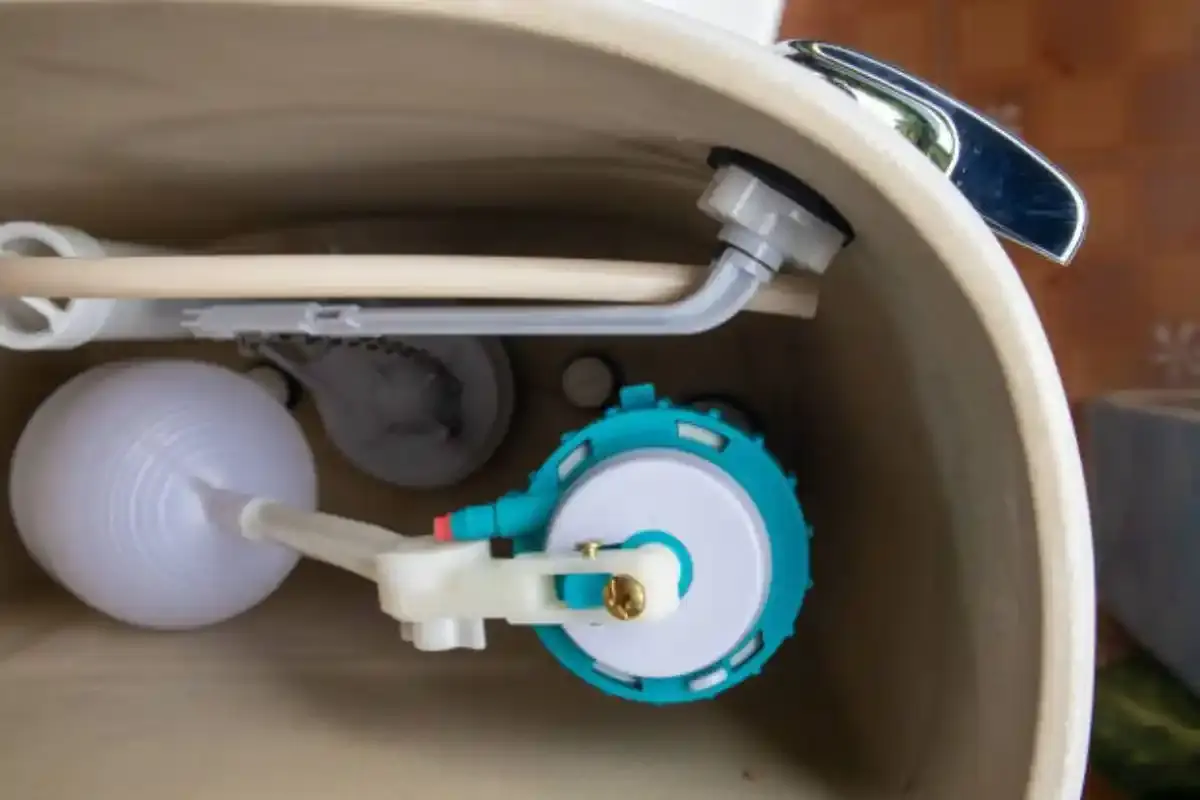
Water on the bathroom floor is not something to wait out. Our dispatch runs 24/7, and while you wait for a plumber you can slow the damage with two quick moves at the toilet itself.
First, turn the small oval handle on the supply valve behind the toilet clockwise until it stops. Then lift the tank lid and raise the float so the tank cannot keep refilling. If the bowl is clogged rather than leaking, a drain cleaning visit is often the next step, and we can tell which problem you have once we see it.
Toilet Overflowing or Leaking Right Now
Stop adding water first. Do not flush again, because a second flush on a blocked line puts more water on the floor.
If the supply valve will not turn, or the water is coming from somewhere else, shut off the main water valve for the house and call us. Same-day appointments are available when the schedule allows, and after-hours calls get answered by a dispatcher.
- Close the valve behind the toilet clockwise, and lift the tank float.
- Put towels at the base and move rugs and electronics off the floor.
- Look below for a wet ceiling, since a leak at the base can drip into the room under it.
- If sewage is backing up through other drains too, stop using water and call right away.
Why a toilet keeps running, and what usually fixes it
A running toilet wastes water all day and often rings up the water bill before anyone notices. The cause is almost always inside the tank, where a few cheap parts wear out after years of use.
Worn flapper
The rubber flapper seals the tank outlet. When it warps or gets slimy, water seeps into the bowl and the tank keeps topping off.
Tired fill valve
If the fill valve will not shut off, water rises to the overflow tube and drains away. Replacing the valve is a routine repair.
Bad chain or float
A chain that is too short holds the flapper open, and a misadjusted float lets the tank overfill. Both are quick adjustments.
Cracked tank or bowl
A hairline crack in porcelain does not repair well. Replacement is the honest answer once the tank or bowl is leaking from the body.
Clog or flange problem? A quick way to sort it out
| What you see | Likely cause | What we do |
|---|---|---|
| Bowl fills high and drains slowly | Blockage in the trap or just past it | Clear it with a closet auger or a drain machine |
| Several fixtures gurgle or back up | Problem in the main drain, not the toilet | Inspect the line and clean it |
| Water around the base after flushing | Failed wax ring or loose closet bolts | Pull the toilet, reset it with a new ring |
| Toilet rocks side to side | Uneven floor, loose bolts or a flange set too low | Shim or reset, and repair the flange if needed |
A back-up that also shows in a tub or floor drain usually means a stoppage further down, and sewer line cleaning can reach what a closet auger cannot.
Leaks at the base and a toilet that rocks
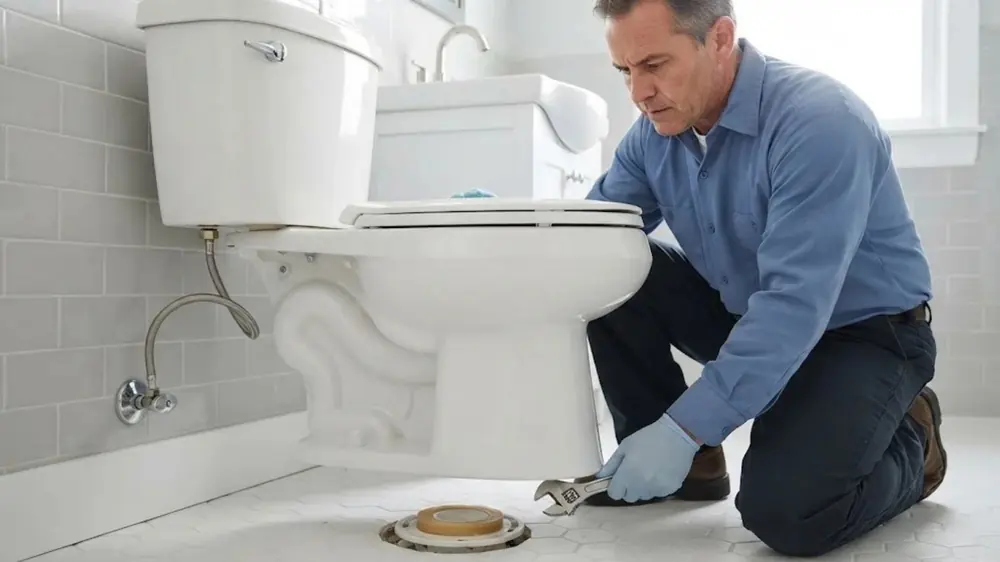
Every toilet sits on a wax ring, a thick gasket that seals the bowl outlet to the drain flange. When that seal fails, water seeps out at the floor with each flush. You may see staining, soft flooring, a musty smell, or a damp spot on the ceiling below.
Closet bolts hold the toilet to the flange, and they should be snug but not cranked down, because overtightening can crack the porcelain. A rocking toilet breaks the wax seal over time. We reset it with a new ring, check that the flange sits level on top of the finished floor, and replace corroded bolts.
Replacing a toilet in an older bathroom
A toilet with a cracked bowl, a chronic clog from an old design, or repeated seal failures is usually better replaced. The big measurements are the rough-in, which is the distance from the finished wall to the center of the drain, and the flange height.
Twelve inches is the most common rough-in, but ten and fourteen inch layouts exist, so we measure before you buy a new toilet. A flange should sit on top of the finished floor, not below it, or the seal will not hold. Taller comfort height bowls sit a few inches above standard ones and are easier on knees. Water-saving models use less water per flush than older tanks, which adds up on a family's water bill over the years.
Shut off and drain
We close the supply valve, flush the tank empty and sponge out what remains in the bowl.
Disconnect and lift
The supply line comes off, the closet bolts come out and the old toilet is lifted away.
Inspect the flange
We check the flange for cracks, rust and height, and repair or replace it if needed.
Set the new toilet
A fresh wax ring or sealing gasket goes in, the bowl is set level and bolted down evenly.
Test and clean up
We flush several times, watch the base for seepage and haul away the old unit if you ask us to.
If you also want a new faucet or other fixtures set during the same visit, our fixture and faucet work is handled together, which saves a second trip. A bigger remodel with new rough-in piping falls under plumbing installation.
Is it a toilet leak or something else?
A silent leak is the sneakiest kind. Drop a few drops of food coloring into the tank and wait about twenty minutes without flushing. If color shows in the bowl, the flapper is leaking.
Water that appears around the toilet may also come from the supply line, the shutoff valve or a pipe in the wall. Winters in the south suburbs bring freeze and thaw cycles, and a supply line in an exterior wall can crack or loosen. If we cannot find the source at the fixture, leak detection is the next step, and for a burst line the answer is burst pipe repair.
Permits and licensing in Park Forest
The Village of Park Forest says all contractors working in the village must be Park Forest licensed, and it adopts the Illinois State Plumbing Code. A simple toilet swap is usually minor, but moving a drain or adding fixtures can need a permit. Call the Building Department at Village Hall to confirm.
What affects the cost of toilet repair or replacement
Repair or replace
Swapping a flapper or fill valve is a small job. Resetting a toilet with a new wax ring takes more labor, and a full replacement adds the fixture itself.
The toilet you choose
Standard two-piece bowls, comfort height models and one-piece designs vary widely in price, and you can supply your own if it fits the rough-in.
Flange and floor condition
A damaged flange or soft subfloor adds repair work that we can only judge after the toilet is lifted.
Access and bathroom layout
Tight spaces, old shutoff valves that must be replaced and difficult supply lines all change the time on site.
Timing of the visit
Calls that need a visit at night or on a weekend are priced differently from a scheduled daytime appointment.
Homeowner insurance may cover water damage from a sudden failure but usually not a worn part, so keep photos of any damage. A permit is only needed for certain work, and we will say so up front. Call (855) 575-2890 and we will talk through your situation and give you a real number.
Get Your Real NumberQuestions we hear
Yes. Our dispatch line is open 24/7, including nights and weekends. We do not promise an arrival time, because it depends on the schedule and the roads, but we offer same-day appointments when available and tell you plainly what to expect when you call.
Do not flush again. Reach behind the toilet and turn the supply valve clockwise until it stops, then lift the tank lid and hold the float up. If the water keeps rising, close the main water valve for the house and call us.
Most often the flapper no longer seals the tank outlet, or the fill valve is not shutting off. Both parts wear out. Jiggling the handle only hides the problem, and the water that slips by shows up on your next water bill.
The usual cause is a failed wax ring or loose closet bolts, which lets water escape at the floor with each flush. Sometimes the leak is from the supply line or tank bolts and only runs down to the base, so we check the source before pulling the toilet.
Measure from the finished wall behind the toilet to the center of the floor bolts. Twelve inches is common, but ten and fourteen exist. Call us before you buy and we can check the rough-in and flange height so the new toilet fits the first time.
Standards and sources
Written by the Park Forest Express Plumbing team. Plumbing work in Illinois follows the Illinois Plumbing Code, 77 Ill. Adm. Code 890, which the Village of Park Forest adopts. The Village Building Department states that contractors must be Park Forest licensed and that a permit is required. You can confirm any plumber's license on the Illinois Department of Public Health license verification tool.