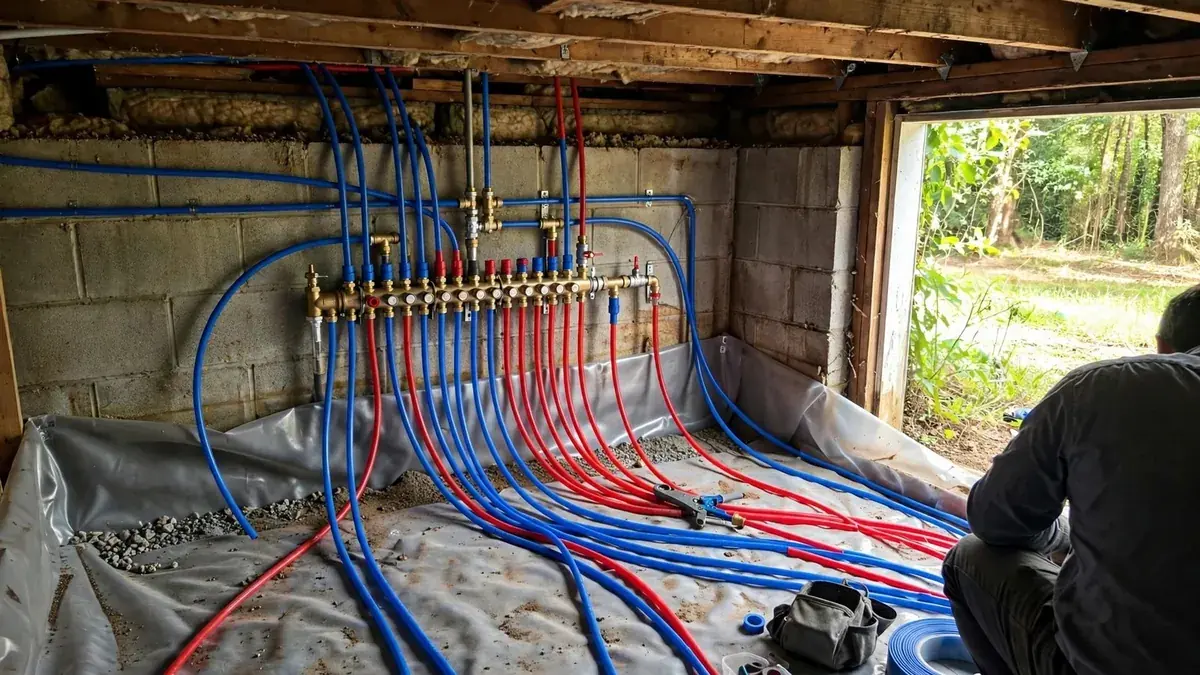
Repiping means replacing the water supply lines in your home, either the whole system or a major branch. It is a bigger decision than a single repair, so it helps to know what is behind the walls before anyone cuts. Call (855) 575-2890 and we will talk through what you are seeing.
Signs It Is Time to Repipe
Brown or rusty water
Galvanized steel rusts from the inside. Discolored water from several faucets, especially after the water sat overnight, often points to corroding pipe.
Low pressure everywhere
As rust builds up, the opening narrows. If pressure drops at every fixture, not just one, the supply lines may be restricted.
Repeat leaks in new places
Fixing one pinhole and finding another a month later suggests the pipe wall is thinning throughout, not failing at a single spot.
Blue-green stains and pinholes
On copper, green crust at joints and tiny pinhole sprays mean the metal is wearing from the inside out.
Because Park Forest began as a planned community announced in 1946, plenty of houses here have decades behind their plumbing. Check your home's build year and look at the pipe near the water heater or meter. That one look tells us a lot about what to expect, and about whether a leak detection visit is the right first step.
Replacing Galvanized and Aging Copper
Galvanized steel is iron pipe coated in zinc. The coating wears away over decades, then rust forms inside and slowly closes the pipe. You can test by scratching a pipe with a key. If a magnet sticks and the metal looks gray, it is steel.
Copper lasts much longer, but it can still develop pinholes, especially at old solder joints or where the water chemistry is aggressive. The Village adds orthophosphate to its water for corrosion control, which helps protect pipes, but it cannot repair a line that is already thin. When leaks show up at several points on copper, replacing the run is often cheaper over time than chasing each one. If a pipe has already failed, see our burst pipe repair page.
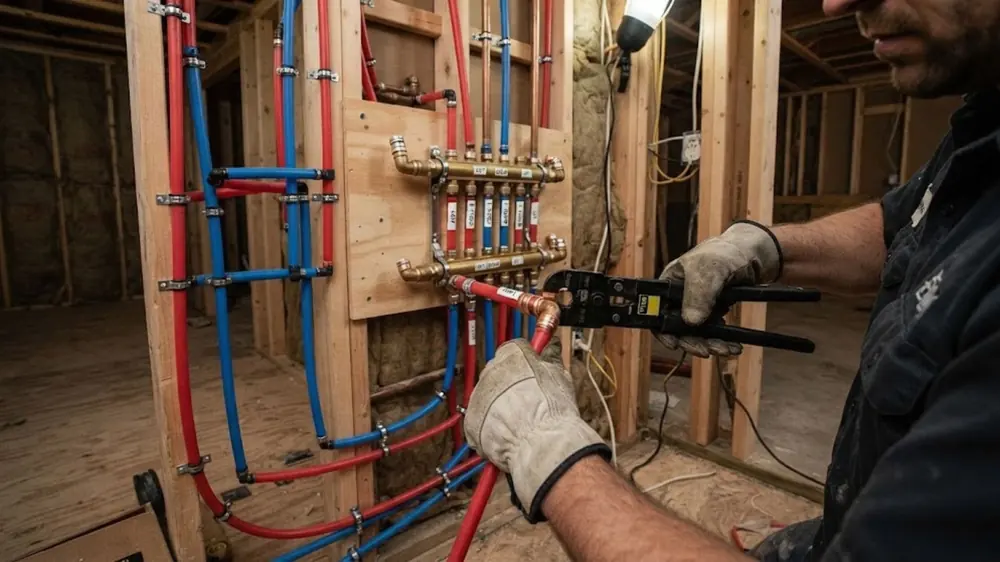
PEX or Copper: The Trade-Offs
| Factor | PEX | Copper |
|---|---|---|
| Installation | Flexible tubing that snakes through walls, so fewer openings | Rigid pipe that needs more joints and often more wall access |
| Freeze tolerance | Expands somewhat, but can still split if hard frozen | Can split when frozen, and the damage can be harder to see |
| Corrosion | Does not corrode or pit | Can pit or corrode in some conditions |
| Sunlight and outdoor use | Degrades under UV, so keep it indoors | Not affected by UV |
| Joints | Crimp or expansion fittings with fewer fittings overall | Soldered or press fittings at every turn |
| Typical use | Common in remodels and fast whole-house runs | Preferred by some owners for exposed or visible runs |
Neither material is always right. PEX usually means less demolition, while copper has a long track record and some owners prefer it. We recommend based on your layout, your budget and what the code allows, and we tell you the reasons.
Planning Around Your Drywall
Repiping does not have to mean tearing out every wall. With PEX especially, we can often work through small access openings, closets, attic spaces and the basement ceiling. Some walls still need to be opened, and where we cannot fish a line through, an opening is the only honest answer.
Plan on stretches without water, and on drywall patching that is not part of our scope. We walk through the home beforehand, mark where openings are likely, and tell you which rooms to clear. Upgrading shutoff valves and adding fixtures can be done during the same visit through plumbing installation.
The Water Service Line From Meter to House
The service line is the buried pipe that runs from the meter to where water enters your house. It may be copper, galvanized steel, plastic or, in older systems, lead. Everything inside the house depends on it, so a new interior system on a failing service line is a half-fix.
Signs of a failing line include pressure that drops without cause, a wet patch in the yard in dry weather, or a meter that spins with everything off. We can trace and test it, as described on our leak detection page, then talk through replacement. Call 811 before any digging.
Lead Service Lines and How to Check Yours
Lead was used in service lines in many American cities decades ago, and some old lines remain. To find out what yours is made of, look at the pipe where it enters the house. A scratch test on a dull gray pipe that is soft and does not attract a magnet may suggest lead, though this is not a lab test.
The better step is to ask your water utility what material your service line is. In Park Forest that is the Village, and Public Works at 708-503-7702 can point you to water test summaries. If you live in a town served by another utility, such as University Park's Aqua Illinois, ask that company directly. If lead is possible, test your water and replace the line.
Cast Iron Drain Stacks
Supply lines get the attention, but old drains age too. Cast iron stacks rust from the inside and can crack, and that often shows up as a slow drain, a smell, or a stain on a ceiling below. A camera inspection tells us the condition. When a stack needs replacing, it is a separate project from the supply side, and can be scheduled alongside repiping to open walls only once.
Permits and Park Forest Contractor Rules
All contractors doing work in the Village of Park Forest must be Park Forest licensed, and the Village adopts the Illinois State Plumbing Code. A permit is required for homeowner and contractor work alike. A homeowner doing their own work submits a waiver form, and if a contractor pulls the permit, the homeowner signs the proposal or application.
Permits are not taken by email or online. They are dropped off or mailed to the Building Department at 350 Victory Drive. Illinois also requires plumbers to be licensed, and you can check a license on the IDPH verification tool before hiring anyone.
What affects the cost of repiping
Size and layout of the home
More bathrooms, floors and fixtures mean more pipe and more connections.
Pipe material
PEX and copper differ in material cost, labor and the fittings required.
Wall access and finish work
Open basement ceilings are simpler than plaster or tile, and drywall repair is a separate trade.
Service line and drains
Replacing the buried service line or a cast iron stack adds scope beyond the interior supply lines.
Permits and inspections
Park Forest requires a permit, and the schedule includes time for inspection.
Homeowner insurance usually does not pay to replace pipes that wore out with age, though it may address sudden damage, so ask your insurer. Permit fees are set by the Village. Call us and we will give you a real number after we see the house.
Get Your Real NumberQuestions we hear
One leak on healthy pipe is a repair. Rusty water, low pressure at every fixture, or leaks in several places point toward replacing the run. We look at the pipe, test pressure and explain which fits your home.
Neither wins every time. PEX is flexible, resists corrosion and needs fewer wall openings, but it cannot be exposed to sunlight. Copper has a long history and handles UV. We choose with you based on layout and budget.
Some openings are usually needed, but PEX often allows smaller access holes and routes through attics and basements. We mark likely openings before work starts. Drywall patching and painting are separate from plumbing.
Expect intervals without water during the work, but it depends on the size of the home and how many walls we can reach. We plan the order so you can keep at least one bathroom usable when we can.
Yes. A permit is required for homeowner and contractor work alike, and contractors must be Park Forest licensed. We explain the paperwork, and the Building Department takes permits in person or by mail.
We can inspect the pipe at the entry point, but the best answer comes from your water utility's records. Ask the Village or your supplier, and consider a water test if lead is possible.
Safety steps before a repipe
Find your main water shutoff before work starts and make sure everyone in the house knows where it is. Switch off the water heater breaker or gas control before the lines are drained.
Keep children and pets away from open walls, cut pipe and tools. If the work opens walls near wiring, leave electrical questions to a licensed electrician.
Standards and sources
Written by the Park Forest Express Plumbing team. Plumbing work in Illinois follows the Illinois Plumbing Code, 77 Ill. Adm. Code 890, which the Village of Park Forest adopts. The Village Building Department states that contractors must be Park Forest licensed and that a permit is required. You can confirm any plumber's license on the Illinois Department of Public Health license verification tool.