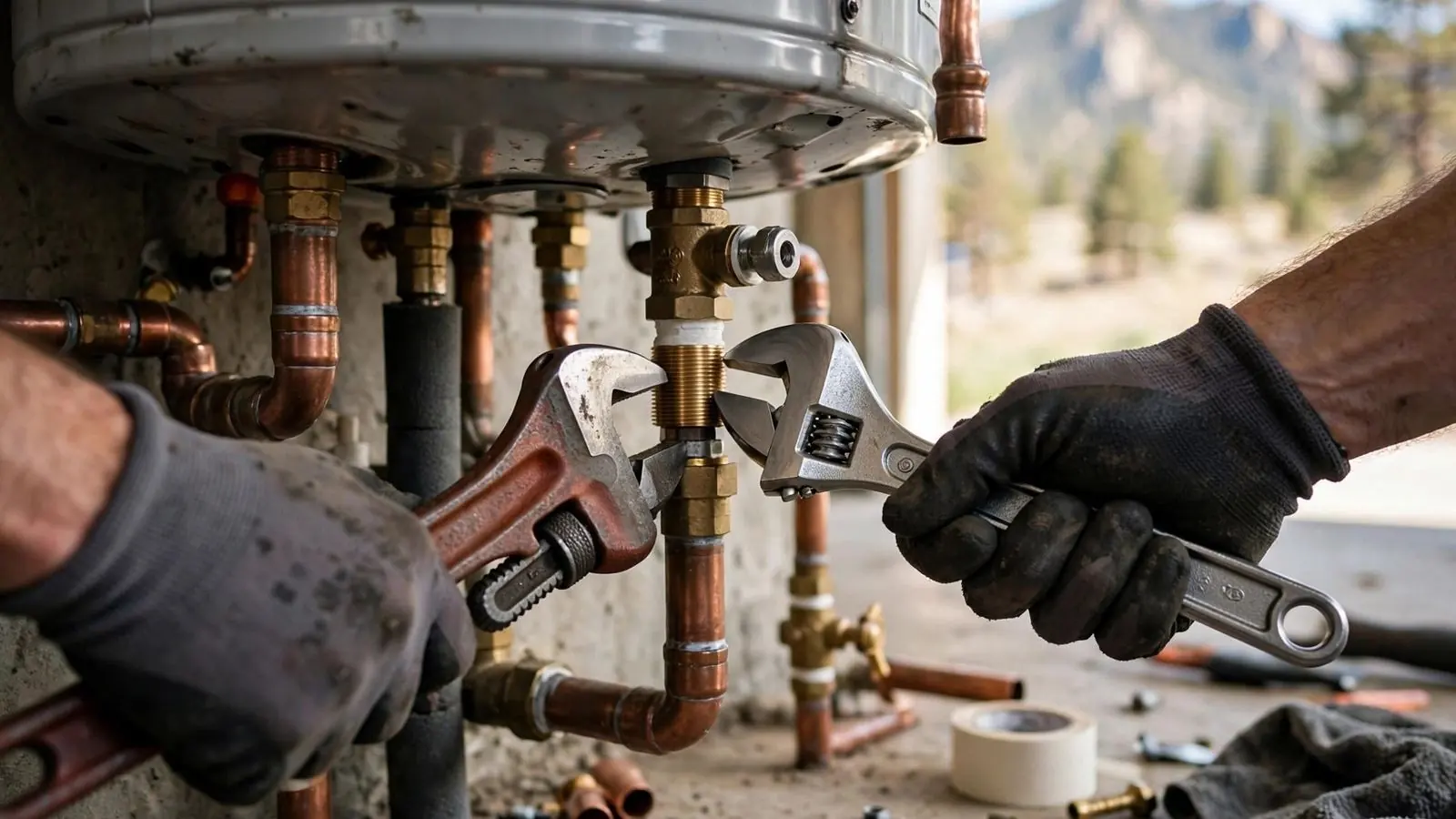
Putting in a water heater is mostly planning. The tank is the easy part, and the location, the fuel supply, the vent path and the drain are what decide whether the job passes inspection and lasts. If you are doing a remodel, finishing a basement or moving the laundry, this is the moment to sort it out.
Where the heater goes and why it matters
A heater needs clearance for service, a floor that can hold a full tank, and a way to get water out if it leaks. Most are in a basement, garage or utility closet. A closet with a gas unit also needs combustion air, and an attic placement needs a drain pan piped to a safe discharge.
Moving a heater farther from the bathrooms means longer hot water runs, so more waiting and more wasted water at the tap. Moving it closer to the fixtures it serves usually pays off. We measure the run and talk through the tradeoff before anyone cuts a pipe.
Fuel and utility readiness
| Type | Supply needed | Common upgrade |
|---|---|---|
| Gas tank | Gas line sized for the burner, shutoff, sediment trap, and a vent to the outdoors | New or larger gas piping, new flue |
| Electric tank | A dedicated circuit and breaker sized to the unit | New circuit or panel work by a licensed electrician |
| Heat pump tank | Dedicated circuit, open air space, condensate drain | Drain path for condensate |
| Tankless gas | Larger gas line, sealed vent, condensate drain on condensing models | Gas line and vent upgrades |
For electric work, we coordinate with a licensed electrician when the panel needs attention. For gas, we confirm the piping can feed the burner. If you smell gas at any point, leave and call the gas utility or 911 from outside.
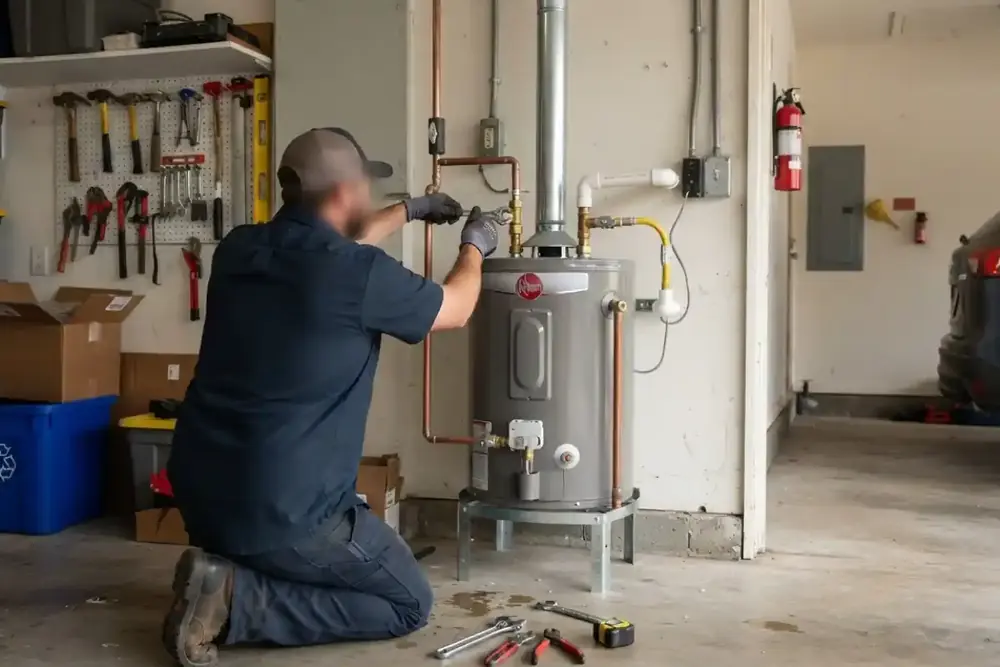
Conversions between fuels
Converting from electric to gas, or gas to electric, is more than a swap. Going to gas needs a gas line, a shutoff and a vent. Going to electric needs a circuit and breaker, and the old flue should be capped or removed properly.
We look at the cost of running each fuel in your home against the one-time cost of the conversion. Sometimes staying with the current fuel is the better call, and we say that when it is true.
Venting, drain pan and expansion tank
Venting
A gas heater must vent exhaust outdoors with the right pipe, pitch and clearances. A bad vent is a safety hazard, not a cosmetic issue.
Drain pan
A pan with a drain line catches leaks from a tank that will eventually fail. It is especially useful above finished space.
Expansion tank
In a closed system, heated water has nowhere to expand. A small tank on the cold line takes up the pressure.
Relief valve piping
The relief valve must discharge through a pipe to a safe spot, never capped and never routed upward.
Code, permits and the Village of Park Forest
Park Forest adopts the Illinois State Plumbing Code, which is Section 890 of the state administrative code. The Village Building Department at 350 Victory Drive lists water heater replacement as a permit item, and all contractors working in the Village must be Park Forest licensed. Homeowners can verify state plumbing licenses through the Illinois Department of Public Health lookup.
A permit is required for hired and do-it-yourself work alike. Homeowners working alone submit a waiver form, and when a contractor pulls the permit the homeowner signs the proposal or application. Permits are not taken by email or online, so plan time for a drop-off or mail.
Planning around a remodel
If walls are open, the heater location is easy to change. Rough-in plumbing, a gas stub or a new circuit costs far less before drywall goes up. Tell us your timeline, and we sequence the work with your contractor so nothing gets buried.
Walk the site
We check space, access, existing piping, gas, vent and electrical.
Choose the system
Tank, hybrid or tankless, sized to your household.
Handle the permit
We explain the Village steps and prepare the paperwork.
Install and test
We set the unit, make connections, test for leaks and combustion or draw, and walk you through the controls.
Choosing a unit type
| Type | Strength | Tradeoff |
|---|---|---|
| Standard tank | Familiar, lowest upfront | Standby heat loss, limited by tank size |
| Hybrid tank | Lower electric use | Needs space and a drain, taller unit |
| Tankless | Endless hot water in steady flow, compact | Higher install work, needs descaling |
If your old heater just failed
For a swap after a failure, see water heater replacement. Our tankless water heater page covers the on-demand option. If the old tank is already leaking, call us and ask about a same-day appointment when available.
What affects the cost of a water heater installation
Unit type and size
Tank, hybrid and tankless units differ widely in price and in installation labor.
Location changes
Moving the heater adds piping, venting or drain work.
Fuel supply upgrades
A larger gas line, a new circuit or a new flue each add scope.
Code items
Expansion tank, drain pan, relief piping and shutoffs.
Permit and scheduling
A permit adds steps, and a remodel schedule can shape timing.
Insurance typically does not pay for planned upgrades, though it may cover damage if a failed tank floods your home. A permit is required with the Village of Park Forest for water heater replacement. Call (855) 575-2890 and we will walk through your space and give you a real number.
Get Your Real NumberQuestions we hear
Yes. The Village lists water heater replacement among permit items, and contractors must be Park Forest licensed. A homeowner doing the work submits a waiver form. Permits are dropped off or mailed, not handled online.
Often yes, if there is space, support, a drain path and a vent route for gas units. Moving it adds piping work, and a longer run to the fixtures can mean longer waits for hot water. We measure before recommending it.
A pan with a drain line catches water if the tank leaks, and carries it to a safe place. It is most useful over finished floors or living space and is often required by code in those spots.
If your plumbing is a closed system, with a check valve or pressure reducing valve at the meter, usually yes. It absorbs the pressure from heated water. We test your house pressure to confirm.
Yes, if the panel can support a new circuit. We coordinate with a licensed electrician for panel work and cap or remove the old flue properly. We compare running costs so the decision is informed.
Yes. Tell us your schedule and we sequence rough-in plumbing, gas stubs and circuits before the walls close. That is usually the least expensive time to move or add a heater.
Safety steps before a heater is installed
If you smell gas, leave the building and call the gas utility or 911. Keep the area around the old heater clear so the plumber can reach the shutoff valves.
Turn off the breaker or gas control only when told to, and never drain a hot tank. Hot water scalds quickly, so keep children and pets away from the work area.
Standards and sources
Written by the Park Forest Express Plumbing team. Plumbing work in Illinois follows the Illinois Plumbing Code, 77 Ill. Adm. Code 890, which the Village of Park Forest adopts. The Village Building Department states that contractors must be Park Forest licensed and that a permit is required. You can confirm any plumber's license on the Illinois Department of Public Health license verification tool.