The simplest check for a hidden leak is the water meter test. Turn off every faucet, appliance, and ice maker, find the meter, and see whether the low-flow indicator or the dials still move. If they do, water is escaping somewhere between the meter and your fixtures. A moving meter does not show where the leak is, but it confirms you are not imagining it.
After that, a plumber uses sound, heat, or gas to find the exact spot. That step is called leak detection, and it is usually cheaper than digging up a lawn to guess.
Signs the water is going somewhere it should not
A higher bill with no change in habits
A jump in your usage that you cannot explain is the most common first clue. Compare this bill with the same month last year.
A soggy or green patch in the yard
Wet ground in dry weather, or a strip of unusually green grass, often sits over a leaking line.
The sound of running water
Stand in a quiet room with everything off. A faint hiss or trickle near the main shutoff can point to a pressurized leak.
Low pressure at every tap
If a shower weakens in all bathrooms at once, the supply line may be losing water before it reaches the house.
Warm spots in the floor
A leaking hot line under a slab can heat the floor above it, which you can feel with bare feet.
Running the meter test the right way
Stop all water use
Close every faucet and make sure no one is running the washer, dishwasher, or irrigation system. Check that the toilets are not refilling.
Read the meter
Open the meter lid and write down the number, or note the position of the small low-flow dial. Take a photo with the time on it.
Wait one to two hours
Do not use any water during this time. A longer wait is better for small leaks, so some people try it overnight.
Read it again
If the reading went up or the dial moved, water is leaking. If not, the house side is tight, and the issue may be a drip you only see when fixtures are running.
A faulty toilet flapper can give a false alarm because it leaks silently into the bowl. Drop a few drops of food coloring in each tank, wait fifteen minutes, and look for color in the bowl before blaming the yard.
A pressure check and what it can tell you
A simple pressure gauge screws onto a hose bib or washing machine valve. Normal household pressure is generally in the range of 40 to 80 psi. Shut off the main valve and watch the gauge for an hour or two.
If the reading falls steadily, water is leaving the pipes. If it holds, the pipes are tight. This helps you decide whether the leak is on the supply side or only appears when the water is running. It also warns you that high pressure itself can strain old fittings, so a gauge reading above 80 is worth sharing with a plumber.
Practical tip: shut off before you leave
If the meter is still moving and you cannot find the cause, close the main shutoff before leaving for the day. A hidden break can release hundreds of gallons overnight. Open a faucet to relieve pressure, and call for help when you are ready to have it traced.
Rather have a plumber look at it?
Describe the problem on the phone and ask for a same-day appointment when one is available.
Who finds the exact spot, and how
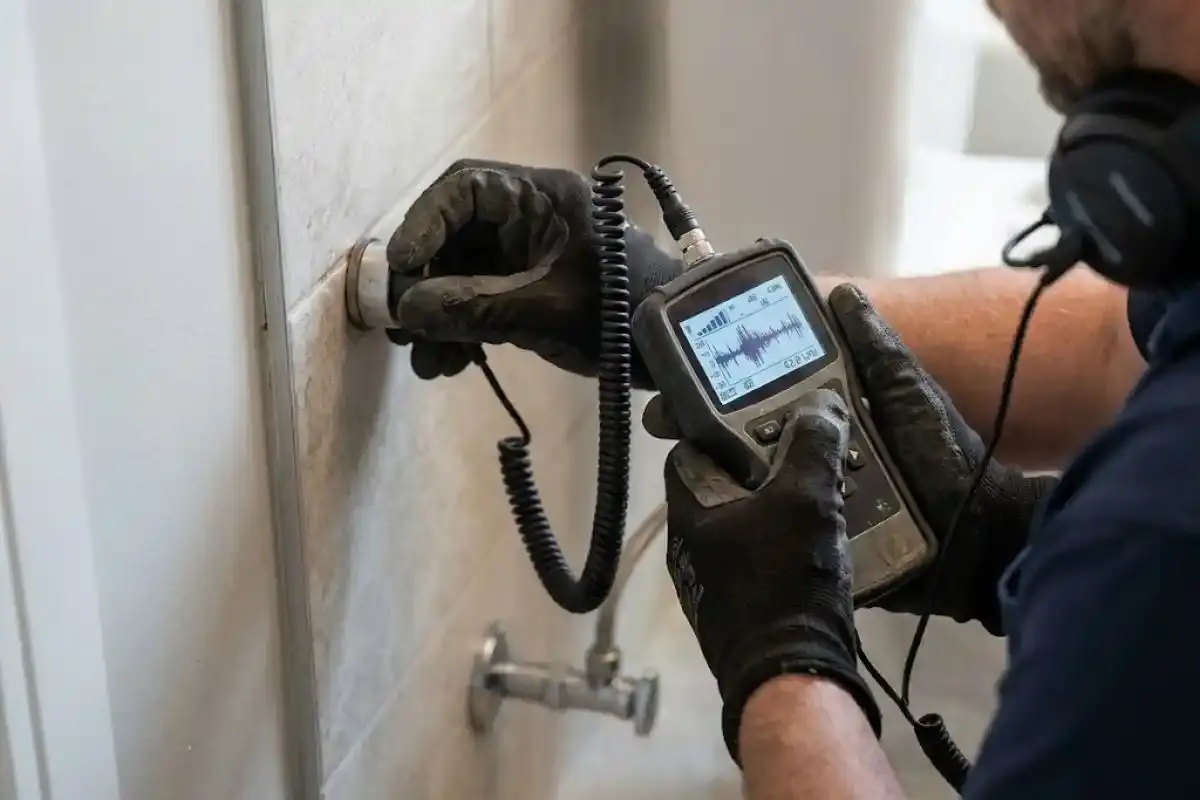
A plumber has several tools. An acoustic listening device picks up the hiss of escaping water through the ground, a thermal camera can show a warm line, and a pipe locator traces where the line runs. Some plumbers fill a line with a harmless tracer gas and sniff for it at the surface.
No method is perfect. We cannot see inside a wall or through several feet of soil, so the result is a best estimate that narrows the dig to a few feet. A small test hole or camera pass may confirm it.
| Method | Best for | Limits |
|---|---|---|
| Meter test | Confirming that a leak exists | Does not show where it is |
| Pressure drop test | Checking whether the lines hold pressure | Cannot tell which section is leaking |
| Acoustic listening | Pressurized leaks in buried pipe | Noisy traffic or plastic pipe can muffle the sound |
| Thermal camera | Hot water lines and slab leaks | Needs a temperature difference |
| Tracer gas | Small leaks that are hard to hear | Requires isolating and filling the line |
Repair or replace the line
Once the leak is located, the choice is between fixing one spot and replacing a longer stretch. A single break in good pipe can often be cut out and repaired. If the line has several pinholes, is badly corroded, or has been patched before, repiping may cost less than repeated repairs.
Also look at who owns which part. In many places the homeowner is responsible for the line from the meter into the house, but arrangements vary, so ask the water provider before you pay for a repair. If you live in University Park or Richton Park, your water supplier and rules are different from Park Forest, so check with yours first.
Park Forest water facts that matter when you suspect a leak
The Village of Park Forest supplies water from six wells, about 300 feet deep into a dolomite limestone aquifer. The Village adds orthophosphate for corrosion control, which helps protect pipes and fittings. Treatment can slow corrosion but it cannot reverse it, so an older line with pinholes is still worth having inspected.
Village Hall at 350 Victory Drive is open 9 to 5 on weekdays, and the Water Department has extended hours until 8 pm on Mondays. If you are chasing a high reading, that Monday window is handy for asking about your account and your meter. Usage is billed per 1,000 gallons, so you can compare your last few bills and see how many thousand gallons were added by the suspected leak. Public Works at 708-503-7702 can also provide water test summaries if you want to know what is in the supply.
Questions we hear
It depends on the size of the break and the pressure. Even a small leak can waste thousands of gallons over a month, and a large break can waste that in a day. Comparing bills and doing the meter test early keeps the loss from adding up.
It can. Water that keeps flowing next to a foundation can wash out soil and cause settling or seepage into the basement. Early detection prevents that. If you see a new wet spot near the house, shut off the main and have the line traced.
You can narrow it down by looking for wet ground, but digging blind is slow and risky. You might hit a gas line, an electrical cable, or another pipe. Listening gear or a locator is safer, and call before you dig to have utilities marked.
Not always. A running toilet, an ice maker, a water softener recharge, or an irrigation system can move the meter. Shut those off, repeat the test, and confirm that nothing else is using water.
The Village of Park Forest runs the water system, and the Water Department keeps extended hours until 8 pm on Mondays at Village Hall, 350 Victory Drive. Bring your recent bills, since usage is billed per 1,000 gallons, and ask about your meter. Run the meter test first so you know if water is moving.
The Village of Park Forest runs the water system, and the Water Department keeps extended hours until 8 pm on Mondays at Village Hall, 350 Victory Drive. Bring your recent bills, since usage is billed per 1,000 gallons, and ask about your meter. Run the meter test first so you know if water is moving.
Standards and sources
Written by the Park Forest Express Plumbing team. Plumbing work in Illinois follows the Illinois Plumbing Code, 77 Ill. Adm. Code 890, which the Village of Park Forest adopts. Local statements on this page come from Village of Park Forest pages, and the Building Department states that a permit is required whether you or a contractor does the work. Before you hire anyone, check the license on the Illinois Department of Public Health license verification tool.