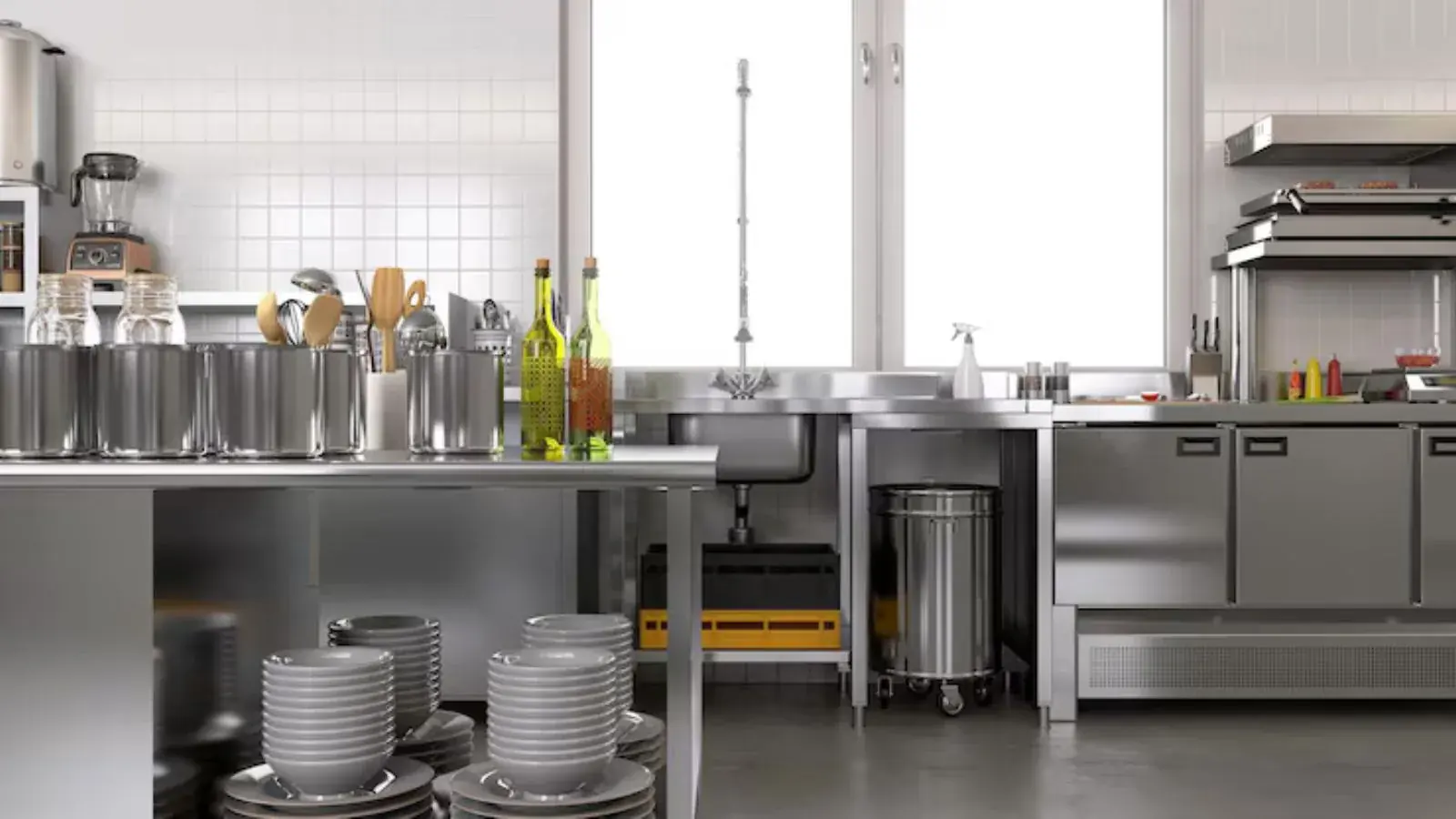
A plumbing failure in a business costs more than the repair, because customers walk, staff go home and inventory sits in water. Call (855) 575-2890 any time, since dispatch runs 24/7 and we offer same-day appointments when the schedule allows. We cannot promise an arrival time, but we can tell you what to do while you wait.
Shut off the water at the main or the affected branch valve, keep people out of wet areas, and move product and electronics off the floor. Photograph everything before cleanup, because a clear record helps with the landlord and the insurer.
Your Business Has a Leak or Backup Right Now
Stop using sinks, toilets and floor drains if sewage or gray water is coming up. Find the nearest shutoff and close it for a leak, then call us and your property manager.
- Keep customers and staff away from standing water near electrical equipment
- Do not run the dishwasher or flush if drains are backing up
- Cover floor drains and move food or paper stock out of reach
- Note the time, the location and what was in use when the problem began
Restaurants, Retail Stores and Offices
Each type of business stresses plumbing in its own way. Restaurants push grease, food solids and heavy water use through kitchen lines. Retail stores often have a few restrooms that serve a lot of people. Offices have lower use but tend to have older supply lines, hidden branches and shared risers.
Many Park Forest storefronts sit in multi-tenant buildings. Downtown Park Forest on Main Street, for example, includes a multi-tenant retail building at 200-298 Main St, and in a building like that a drain or riser can serve several suites. That means a backup in one unit may start in another, so it helps to tell the property manager as soon as you call.
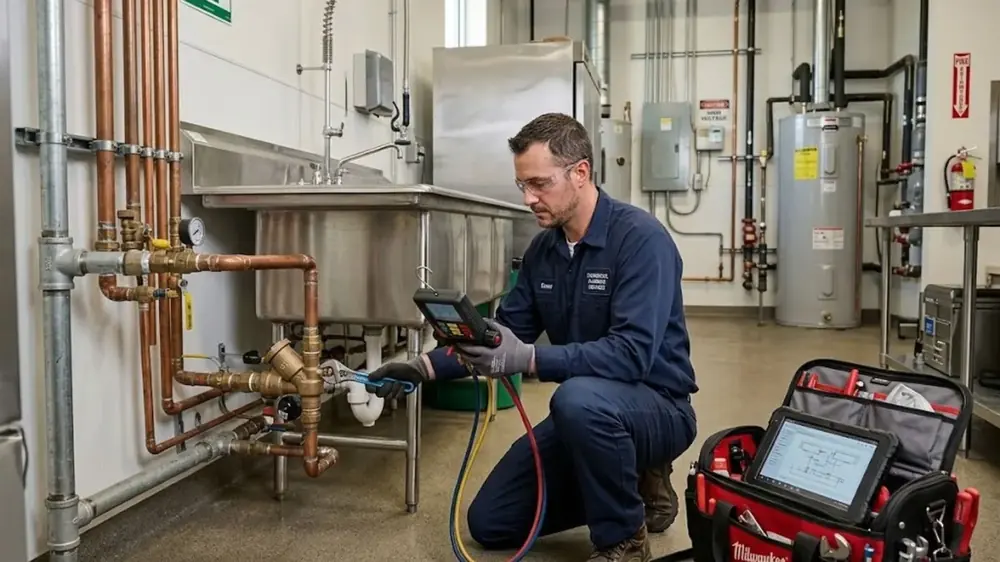
After-Hours Leaks, Backups and Water Damage
Overnight and weekend failures are the most expensive because nobody is there to notice them. A burst supply line can run for hours, and a slow drain can back up into a kitchen before the first shift arrives. Our after-hours service starts with stopping the damage, then moves to repair.
For a burst line, see our burst pipe repair page. For drains, we use cabling or hydro jetting as needed, and for repeat blockages we run a camera inspection to see what is happening in the line. If the sewer is the issue, sewer line cleaning and repair may follow.
Grease Trap and Interceptor Cleaning
A grease trap holds fats, oils and food solids before they reach the sewer. When it fills, the grease passes through and hardens in the line, which causes backups and odors. A common rule of thumb is to clean the trap when grease and solids reach about one quarter of its depth.
We pump out the trap, scrape the baffles, check the inlet and outlet for damage, and dispose of the waste properly. The Village flooding guidance, based on MWRD advice, asks residents not to flush or pour fats, oils, wipes or paper towels. That applies to kitchens, too, and it is why a regular cleaning schedule matters. Ask what schedule suits your volume, and if lines are already coated, we recommend jetting.
Backflow Testing and Devices
Commercial buildings often have backflow preventers on the fire line, irrigation, boilers, carbonated drink systems or kitchen equipment. These devices protect the drinking water from contamination, and many need to be tested on a regular schedule by a qualified tester.
We test, repair and replace backflow assemblies, and we help you keep paperwork in order. A device that fails a test may need new seals, springs or a full replacement. We also install new ones during build-outs through plumbing installation.
Commercial Leak Detection
We find leaks in commercial spaces with the same tools we use at homes, including acoustic listening, thermal imaging, pressure testing and moisture mapping. What we can accomplish depends on scope and access. A leak above a locked suite, inside a shared wall or under a slab can limit what is possible until the area is opened. Our leak detection page explains the methods.
Licensing, Permits and the Sanitary District
The Village states that all contractors doing work in Park Forest must be Park Forest licensed. A permit is required whether the owner or a contractor does the work, and permits are dropped off or mailed to the Building Department at 350 Victory Drive.
Some commercial build-outs also need an approved application from the Thorn Creek Basin Sanitary District. If your project adds fixtures, a kitchen or a change of use, ask us early so the approvals do not hold up your opening date. Illinois also requires plumbers to be state licensed.
Who Handles What in a Leased Space
| Situation | First move | What helps us |
|---|---|---|
| Tenant discovers a leak | Shut the valve, call the manager and us | Photos, the time found, access to the space |
| Backup affects several suites | Manager coordinates, all tenants stop water use | A contact for each suite, and the building layout |
| Landlord orders the work | Manager sends the work order to us | Scope, site contact, access hours and billing details |
| After-hours emergency | Tenant calls us, then the manager | Keys or a lockbox code, and permission to enter |
What affects the cost of commercial plumbing service
Time of the call
After-hours work is staffed differently than a scheduled daytime visit.
Building type and layout
A single-tenant shop is simpler than a multi-tenant building with shared drains and risers.
Access and tenant coordination
Locked suites, ceilings and shared walls affect time and tools.
Scope of the problem
A clogged line, a repair and a full replacement each carry different labor and materials.
Permits and approvals
Some jobs need a Village permit or a sanitary district application.
Commercial property insurance and your lease decide who pays for damage, so check both and keep your documentation. Permit and application fees are set by the Village and the district. Call us and we will give you a real number once we understand the job.
Get Your Real NumberQuestions we hear
Yes. Dispatch runs 24/7 and we offer same-day appointments when the schedule allows. We do not promise an arrival time, so shut off the water, keep people out of wet areas and photograph the damage while you wait.
It depends on how much you cook and how big the trap is. A common rule of thumb is cleaning when grease and solids fill about a quarter of the depth. We can help set a schedule based on what we find.
Yes. We test, repair and replace assemblies on fire lines, irrigation, boilers and food service equipment. Many need regular testing, and we can help you keep records. Call with the device type and location.
Call us with the address, the problem, a site contact and access instructions. A work order helps us show up with the right tools and give a clear invoice for your file. Tell us who approves billing.
Someone with authority to approve work should be reachable, and we need access to the space, keys or a lockbox code. For after-hours calls, tell us if the tenant or the manager will meet us.
Often we can narrow it down with listening, thermal imaging and moisture mapping, but we cannot see inside a wall without opening it. Scope and access shape what is possible, and we explain the plan before we cut.
Many do. Contractors must be Park Forest licensed, and some build-outs also need an approved Thorn Creek Basin Sanitary District application. Tell us what you are doing and we will explain what applies.
Standards and sources
Written by the Park Forest Express Plumbing team. Plumbing work in Illinois follows the Illinois Plumbing Code, 77 Ill. Adm. Code 890, which the Village of Park Forest adopts. The Village Building Department states that contractors must be Park Forest licensed and that a permit is required. You can confirm any plumber's license on the Illinois Department of Public Health license verification tool.