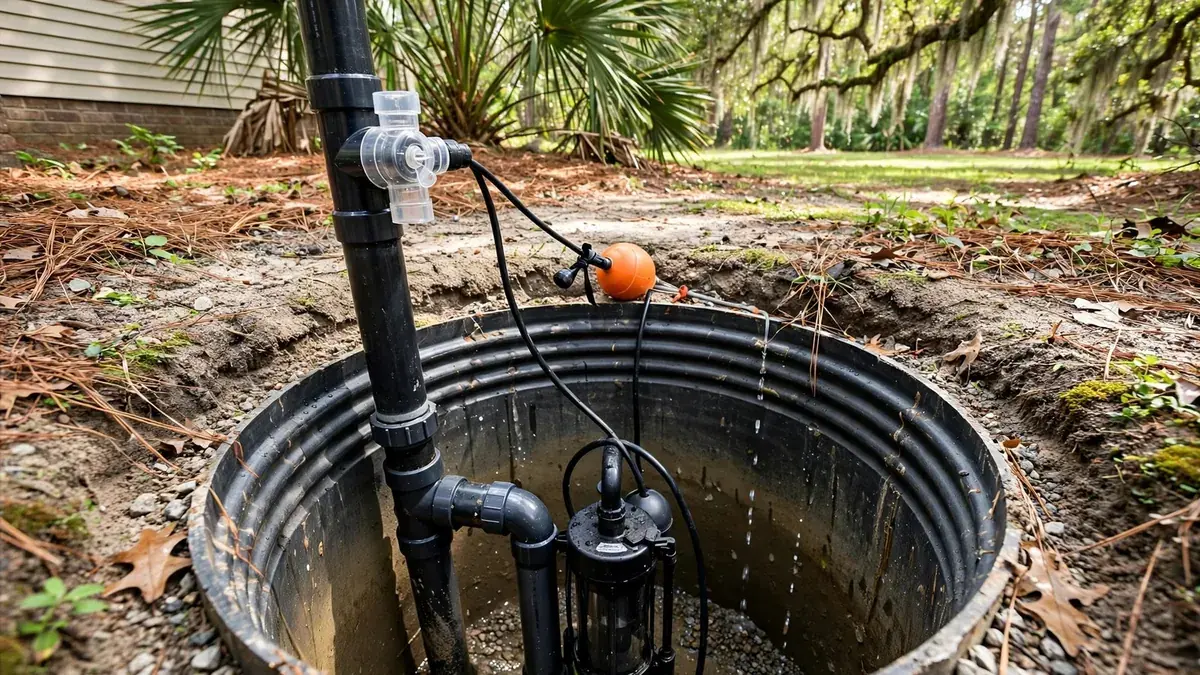
If heavy rain is falling and your sump pump has gone quiet, the basement can take on water in a short time. We dispatch 24/7, and a few checks before we arrive can sometimes tell you whether the pump has power.
Look into the pit. If the water is near the top and the pump is not running, confirm that the cord is plugged in and the outlet's reset button, usually a GFCI, has not tripped. Do not stand in water while checking anything electrical, and if the floor is wet around the panel, stay out and call us.
Sump Pump Stopped or Pit Overflowing in a Storm
A dead pump during a storm is a race against the groundwater. Move anything valuable off the basement floor, and turn off power to wet areas only if you can reach the panel while staying dry.
We offer same-day appointments when available, and after-hours calls reach a dispatcher. If water is entering through the floor drain or toilet instead of the pit, that is sewer water and a sump pump will not stop it.
- Check that the pump is plugged in and the GFCI outlet is reset.
- Lift the float by hand. If the pump starts, the float is the problem.
- Do not stand in water near outlets, the panel or the pump cord.
- Move stored items, furniture legs and electronics up off the floor.
Why sump pumps fail when you need them most
A pump spends most of the year idle, then must work hard during the worst weather. Idle pumps fail in a handful of predictable ways, and most trace back to a part that no one has looked at since the last storm.
Stuck or tangled float
The float switch rises with the water and tells the pump to start. If it jams against the pit wall, the pump never runs or never shuts off.
Failed check valve
The check valve on the discharge pipe stops water from falling back into the pit. When it fails, the pump cycles on and off and wears out.
Clogged intake
Silt, gravel and debris from the drain tile can clog the intake screen and burn out the motor.
Power loss
Storms often knock out electricity at the same time. A pump with no backup is useless during an outage.
Pumps also age. Testing yours each spring by pouring a bucket of water into the pit shows whether the float and motor respond, and a pump that has run hard for many seasons may deserve replacement before it fails. We schedule these checks on regular daytime visits, with after-hours help held for true failures.
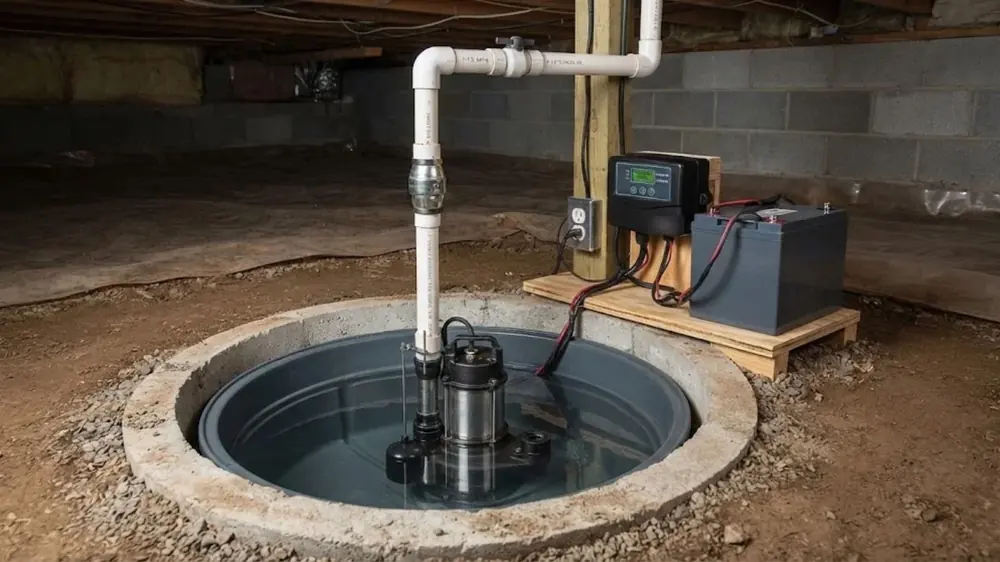
Backup systems that keep working in an outage
A battery backup is a second pump on its own deep-cycle battery that starts if the main pump fails or the power goes out. A water-powered backup uses city water pressure to push water out, with no battery or electricity, but it needs adequate water pressure and wastes some water while running.
| Type | Works when | Watch for |
|---|---|---|
| Battery backup pump | Power is out or the main pump fails | Battery needs testing and replacement over time |
| Water-powered backup | Power is out and water pressure is steady | Uses household water, does not suit well water |
Where the water goes after the pump
A pump only moves water. The discharge line must carry it far enough from the foundation that it does not run back toward the house. In practice this means extending the discharge pipe and any downspouts several feet away from the walls and grading the lawn so it slopes away.
The Village of Park Forest offers downspout extensions and other stormwater programs, including rain barrels, a rain garden incentive and permeable pavement, as part of its flooding guidance. Discharging into the yard is usually the right approach, since sump discharge should not be tied into the sanitary sewer. Check with the Village before you connect to anything.
In winter, a discharge pipe can freeze at its outlet, and the pump then strains against a blocked line. We route and slope the pipe so it drains. Freeze and thaw cycles in the south suburbs make this worth planning.
Installing a new pit and pump
A new installation starts with the pit. A basin commonly runs about eighteen inches wide, set in the floor so it can collect water from drain tile or from under the slab. Sizing depends on how much water comes in and how deep the pit needs to be to give the pump room to cycle.
Locate the low spot
We look at where water collects and where the tile or floor cracks lead.
Cut and dig
The concrete is cut, soil is removed and a basin is set level and backfilled with gravel.
Set pump and check valve
The pump sits on a firm base, with a check valve and a discharge line to the outside.
Test under load
We fill the pit, watch the float cycle and confirm the water leaves the yard end of the pipe.
If a house has no basement, a sump pit may not apply at all. A crawlspace or slab home can still have water problems from grading or leaks, so call anyway and we will say what fits. For lasting seepage, see our basement waterproofing page.
Sump pump or sewer backup? They are not the same problem
What a sump pump can and cannot do
The Village's flooding page explains that urban flooding and sewer backups into basements can happen when sewers are overwhelmed by heavy rain. A sump pump handles groundwater and drain tile water. It does not stop sewage coming up through a floor drain, and a backwater valve on the sewer line is a separate option.
Flood Factor, a map the Village points residents to, gives a modeled risk estimate for an address. It is not a Village measurement, so use it as a guide and not as a verdict.
If sewage backs up, you need sewer line cleaning or a camera look, not a pump.
A note on the storm drain at your curb
A storm drain at the street can overload in heavy rain, and we cannot fix a public sewer. We can check that your own line is clear and that your downspouts and pump discharge are not adding to the problem.
An ejector pump is related but different. It lifts wastewater from a basement bathroom or laundry up to the sewer line, and it sits in a sealed pit, not an open sump. It needs the same attention, since a failed ejector backs up the fixtures below grade.
What affects the cost of sump pump work
Repair or new pump
A float or check valve swap is a smaller job than a new pump, and a pit installation is larger still.
Pump type and horsepower
Pedestal and submersible pumps, and different motor sizes, differ in price and in how much water they move.
Backup system
Adding a battery or water-powered backup adds equipment and labor to the base job.
Pit and discharge work
Cutting concrete, digging a new pit or running a long discharge line to the yard takes time and depends on the house.
Timing of the call
Storm night calls are priced differently from a planned daytime appointment.
Some homeowner policies cover sudden sump pump failure only with an added water backup endorsement, so check your policy before a storm. Most pump swaps do not need a permit, but new pits and drain work may, and we will say so. Call (855) 575-2890 and we will give you a real number.
Get Your Real NumberQuestions we hear
Yes. Our dispatch line is open 24/7, including during storms. We do not promise an arrival time because storm nights are busy, but we offer same-day appointments when available and tell you plainly what to do while you wait.
Check the power first, including the GFCI outlet. If it has power, lift the float by hand. A stuck float, a failed switch or a burned-out motor are the common causes, and we can tell which when we test it.
No. A sump pump moves groundwater from the pit. A sewer backup comes up through floor drains or fixtures when sewers are overwhelmed. A backwater valve on the sewer line is a different solution that we can discuss.
A battery backup is a good idea if your power tends to fail in storms. It runs a second pump when the main one stops. It needs a battery check once or twice a year, and it does not replace a healthy main pump.
Out of the house and well away from the foundation, onto ground that slopes away. It generally should not go into the sanitary sewer, and the Village's downspout extension guidance is a good model for how far to carry the water.
Standards and sources
Written by the Park Forest Express Plumbing team. Plumbing work in Illinois follows the Illinois Plumbing Code, 77 Ill. Adm. Code 890, which the Village of Park Forest adopts. The Village Building Department states that contractors must be Park Forest licensed and that a permit is required. You can confirm any plumber's license on the Illinois Department of Public Health license verification tool.